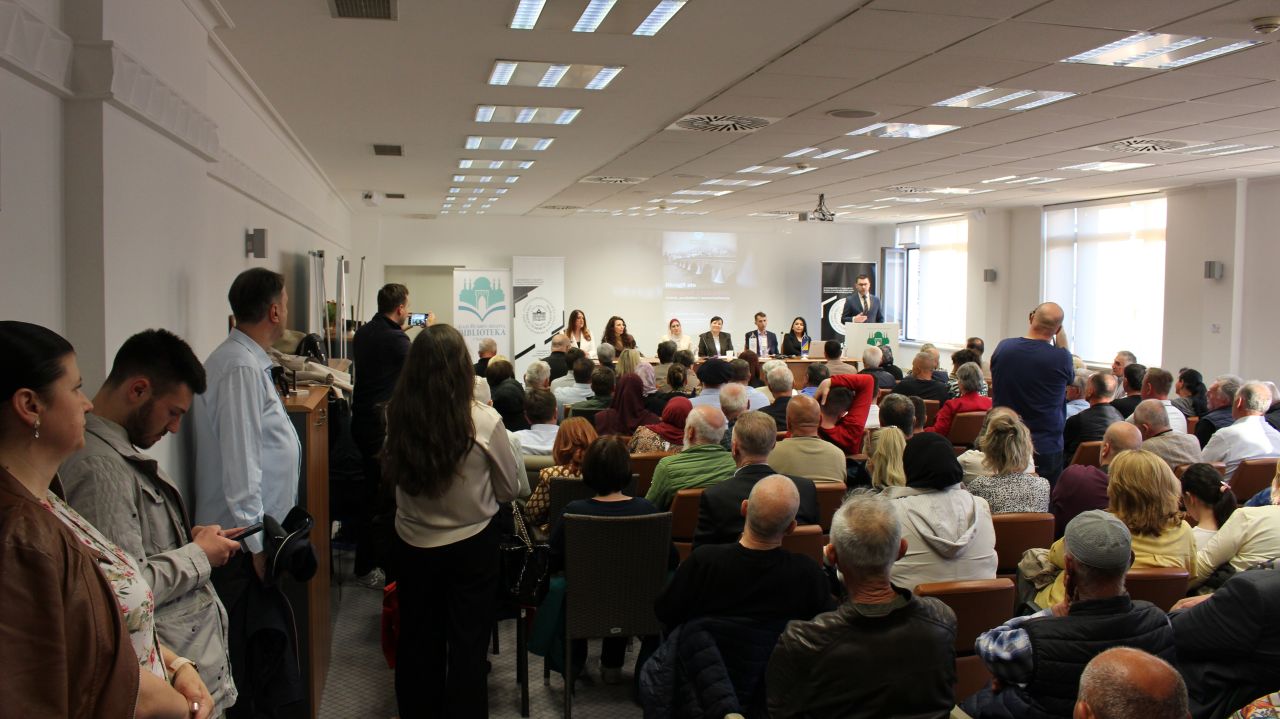
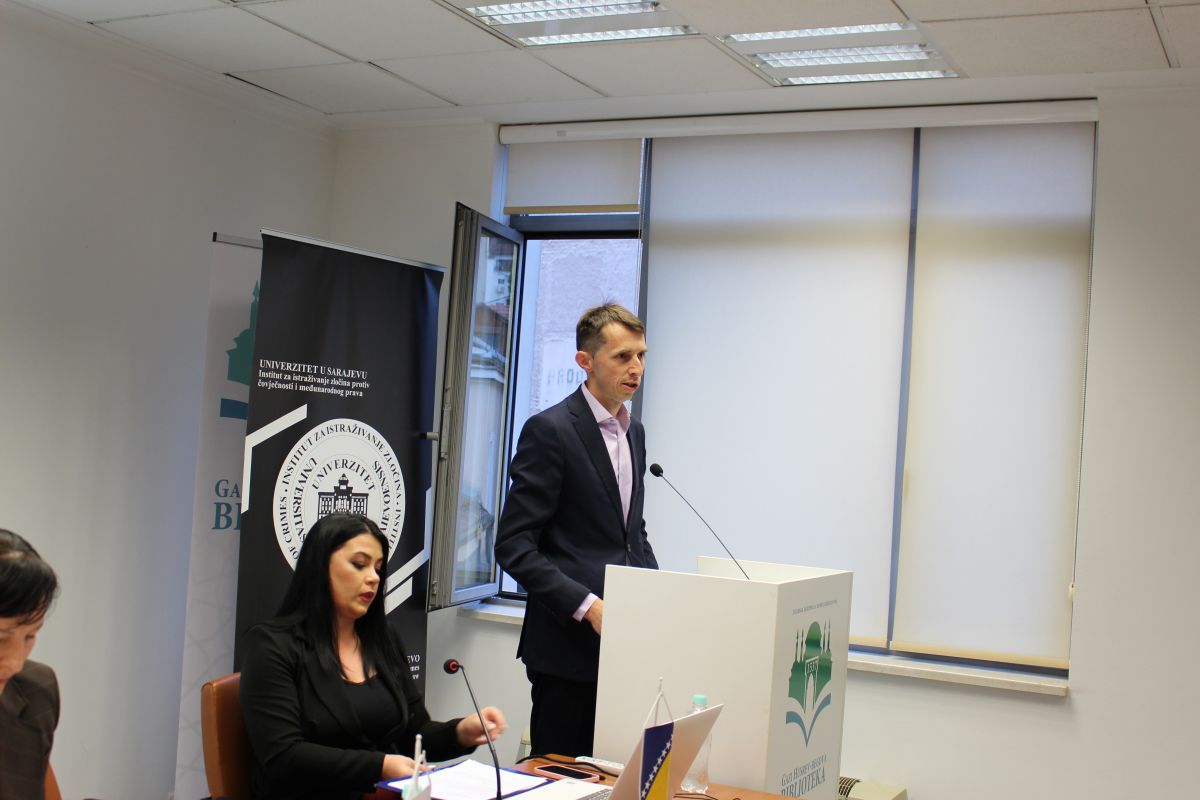
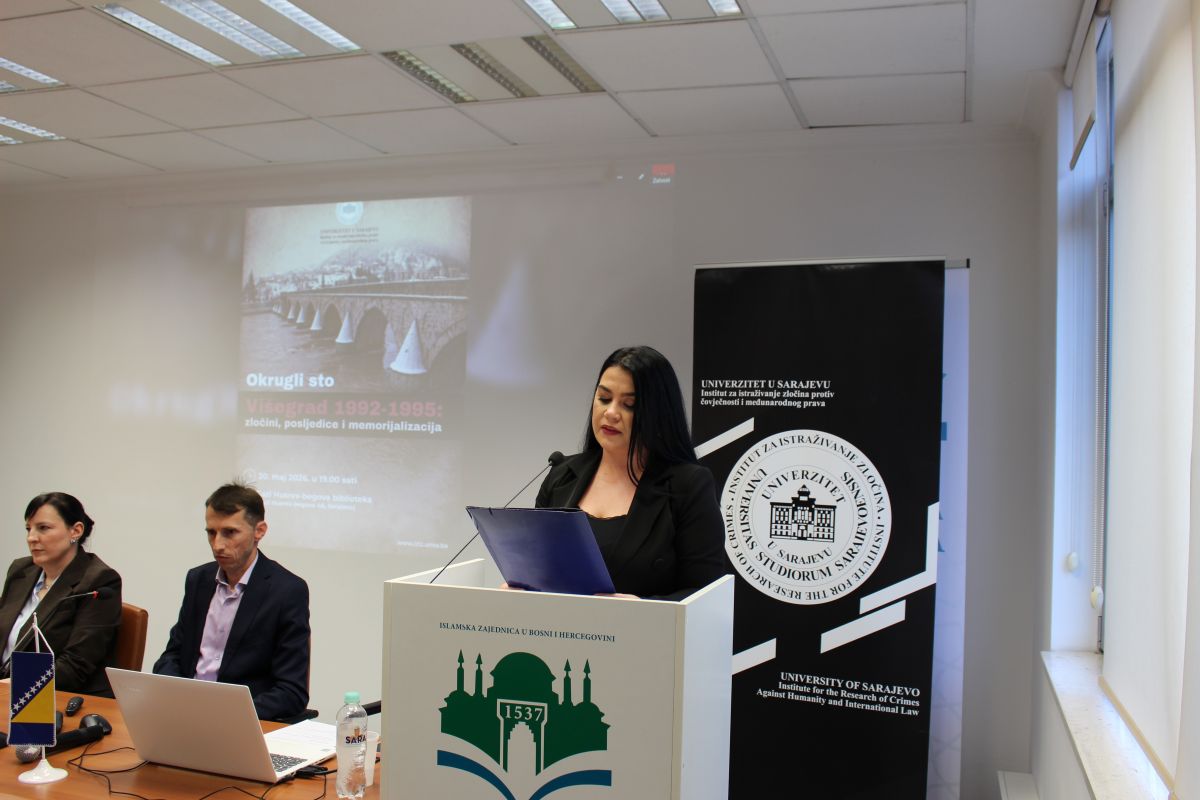
On May 20, 2026, the round table titled “Višegrad 1992–1995: Crimes, Consequences and Memorialization” was held in the organization of the University of Sarajevo – Institute for the Research of Crimes Against Humanity and International Law. The gathering took place within the framework of the program marking the 34th anniversary of crimes committed against Bosniaks in Višegrad.
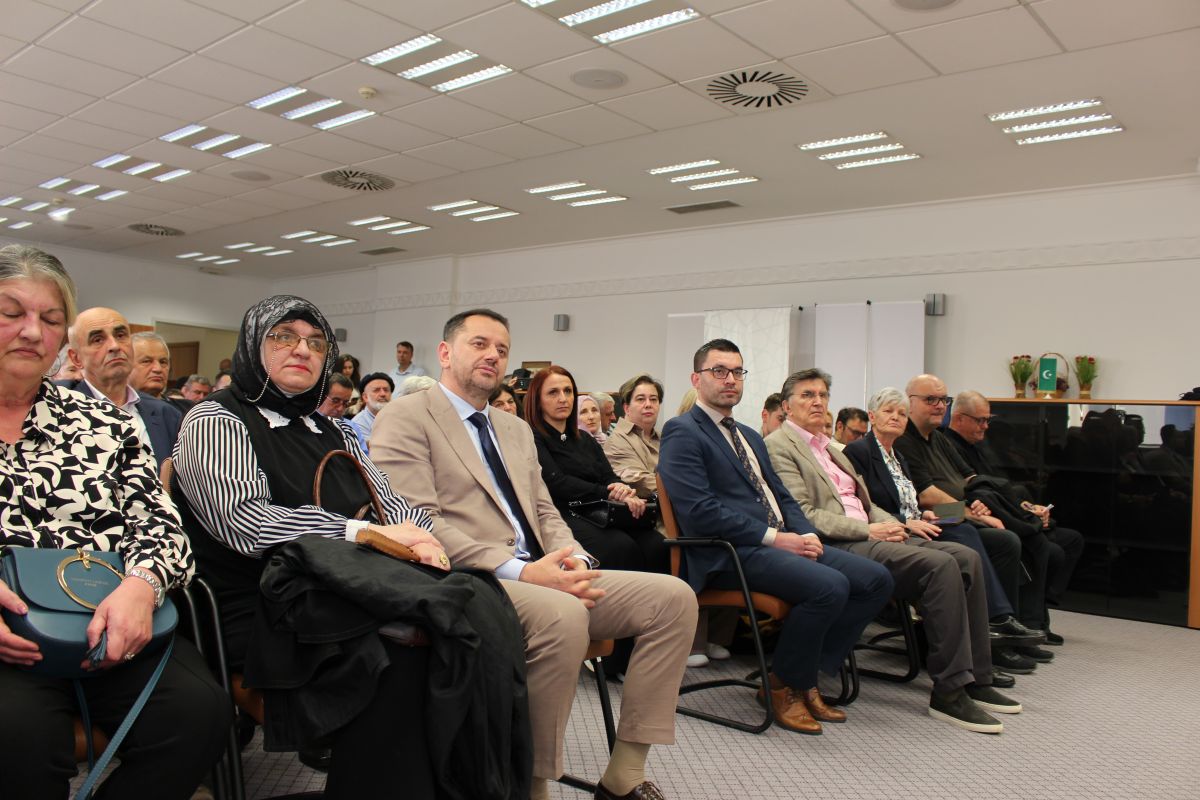
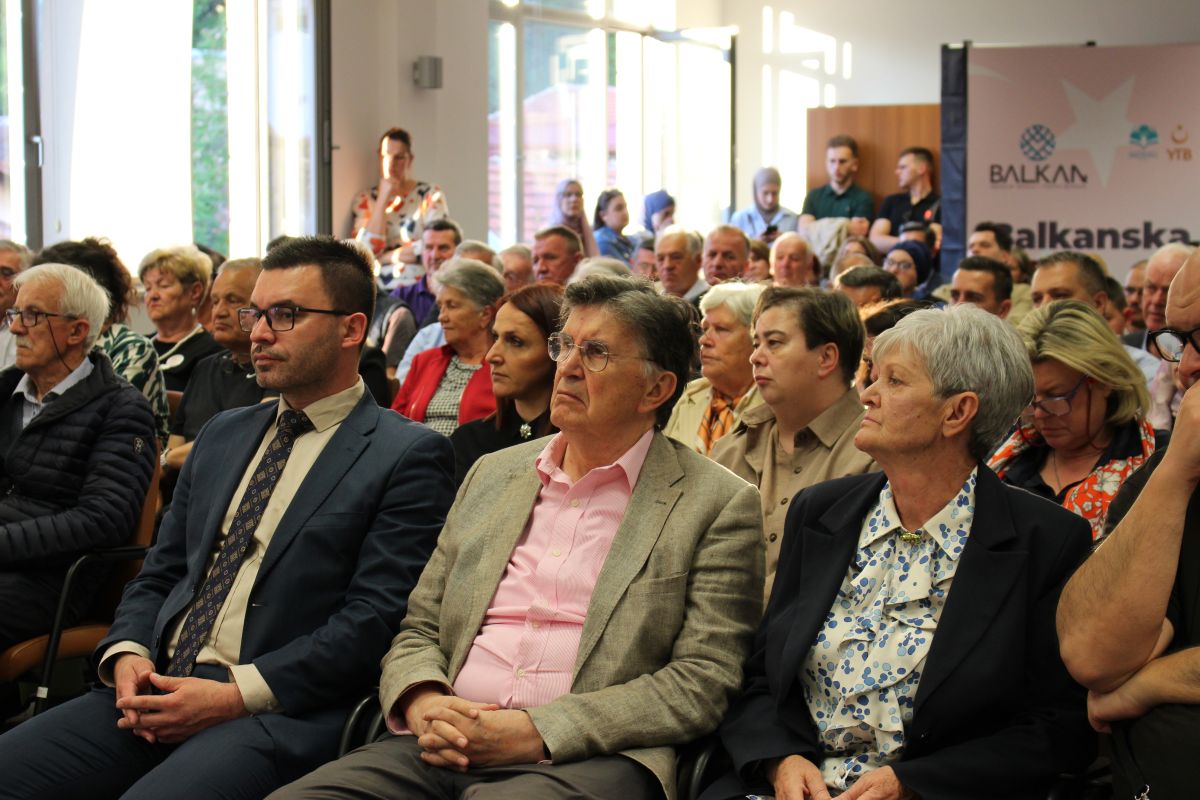
The event was attended by representatives of the academic community, victims’ associations, members of executive and legislative authorities at various levels, as well as numerous other guests and interested citizens.
During the round table, emphasis was placed on the importance of a culture of remembrance, institutional memory, and continuous scientific research into crimes committed in Bosnia and Herzegovina during the 1992–1995 period, as well as in other historical periods.
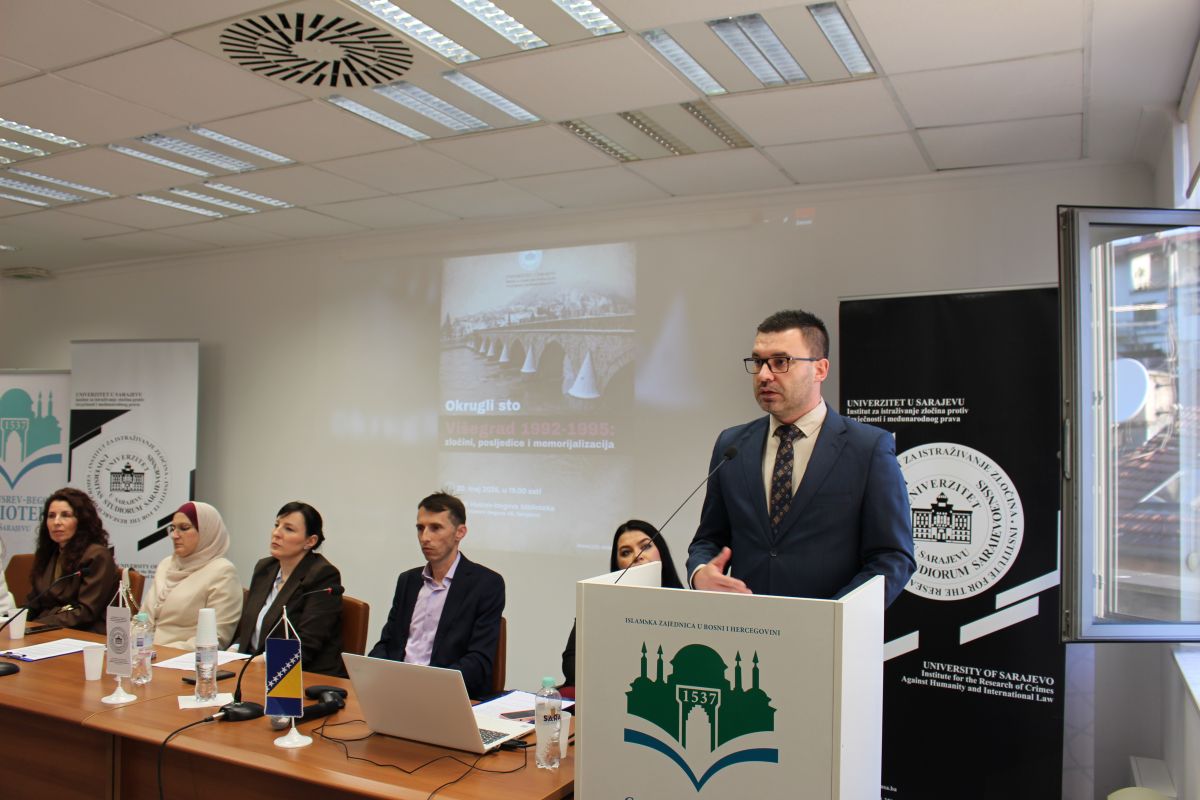
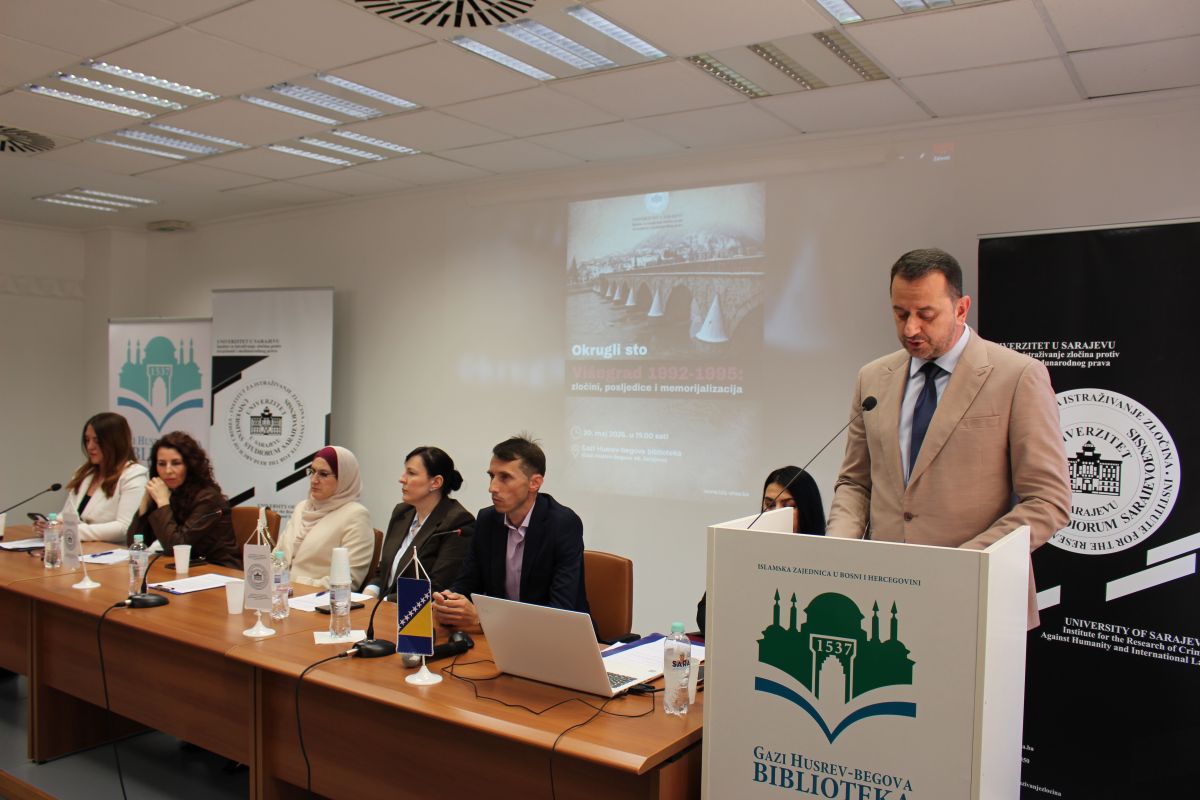
On behalf of the organizers, the opening address was delivered by Dr. Muamer Džananović (Muamer Džananović), Director of the Institute for the Research of Crimes Against Humanity and International Law, University of Sarajevo. In his presentation, Džananović stated:
“Višegrad is one of the places that strongly testifies to the scale of crimes committed during the aggression against the Republic of Bosnia and Herzegovina, as well as in earlier historical periods, but also to the need for continuous research, documentation, and public discussion of these events. It is particularly important to emphasize that contemporary genocide studies increasingly focus on micro-histories, meaning specific families, communities, and human destinies, because it is precisely through them that the full character of the criminal policy becomes visible. Today, more than three decades after the crimes, we are confronted not only with denial and relativization of the past, but also with challenges regarding the position of returnees, insufficient protection of crime sites, and an underdeveloped culture of remembrance. Therefore, it is important to continue researching, educating, and speaking based on facts, verdicts, and evidence.”
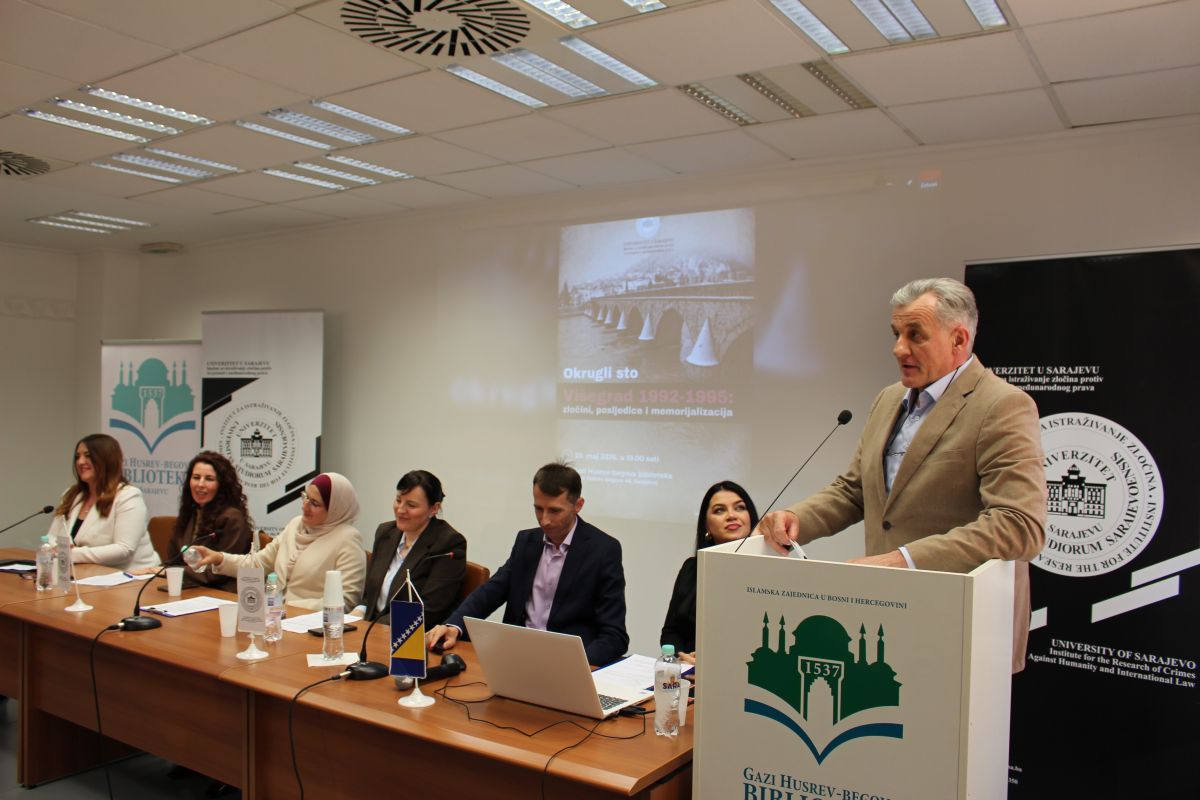
The audience was also addressed by Mehmed Pargan (Mehmed Pargan), advisor to the Chairman of the Presidency of Bosnia and Herzegovina, Dr. Denis Bećirović (Denis Bećirović). In his speech, among other things, he emphasized the importance of the Institute’s work:
“We are witnessing that the Institute has made an important contribution to the research, documentation, and prosecution of war crimes in Bosnia and Herzegovina. Therefore, it is necessary to take concrete steps to enable this institution to work without obstruction. Unfortunately, we live in a time when every patriotic engagement faces obstruction, both externally and internally. The ideologies for which Ratko Mladić (Ratko Mladić) and Radovan Karadžić (Radovan Karadžić) are considered heroes are still alive and pose a threat to peace, freedom, and democracy in these regions... In the past, we did not have sufficient capacity, strength, or knowledge to adequately document and prosecute war crimes against Bosniaks. Today, we have institutions, experts, and an environment in which it is possible to conduct all research. We are proud that the Institute for the Research of Crimes Against Humanity and International Law is leading this process, alongside valuable civil society organizations and distinguished individuals.”
Also addressing those present were Dr. Bilal Memišević, President of the Executive Board of the Majlis of the Islamic Community of Višegrad, and Hida Kasapović, President of the Association of Families of Missing Persons “Višegrad 92,” who are leading the central commemoration of the 34th anniversary of the crimes against Bosniaks of Višegrad. The commemoration will be held at the Mehmed-paša Sokolović Bridge on Saturday, May 23, 2026, at 12:00 p.m.
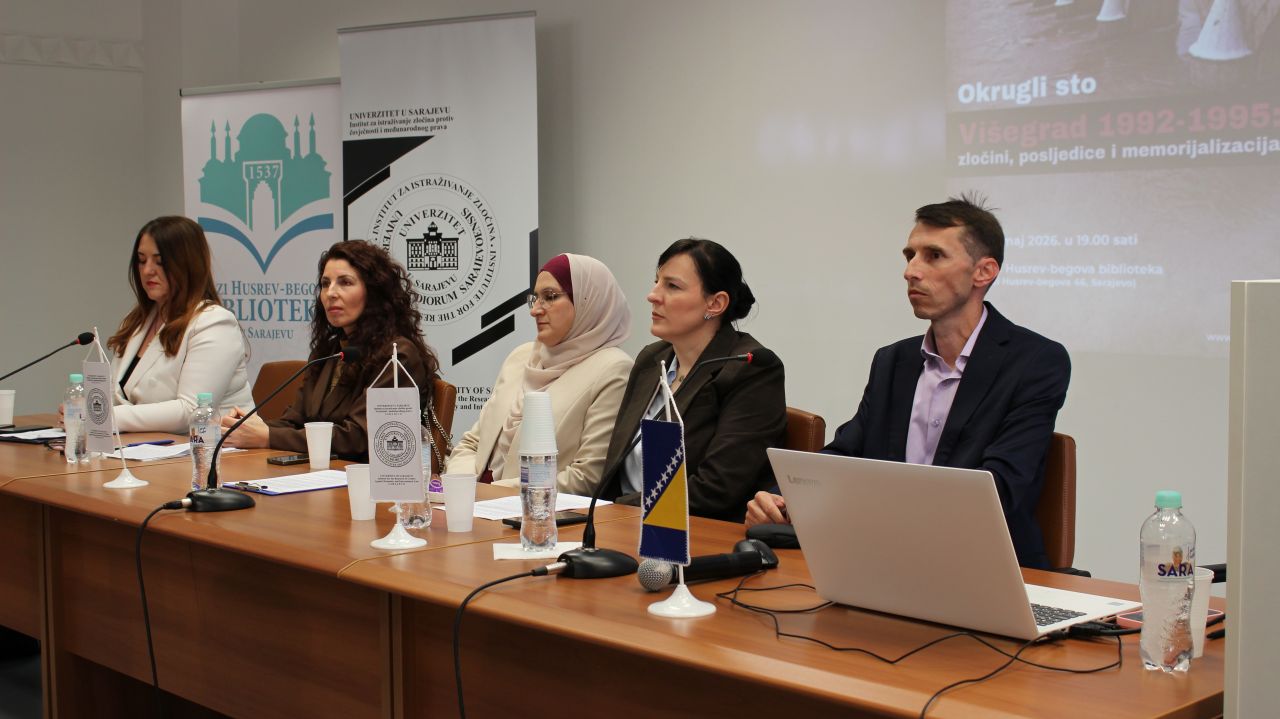
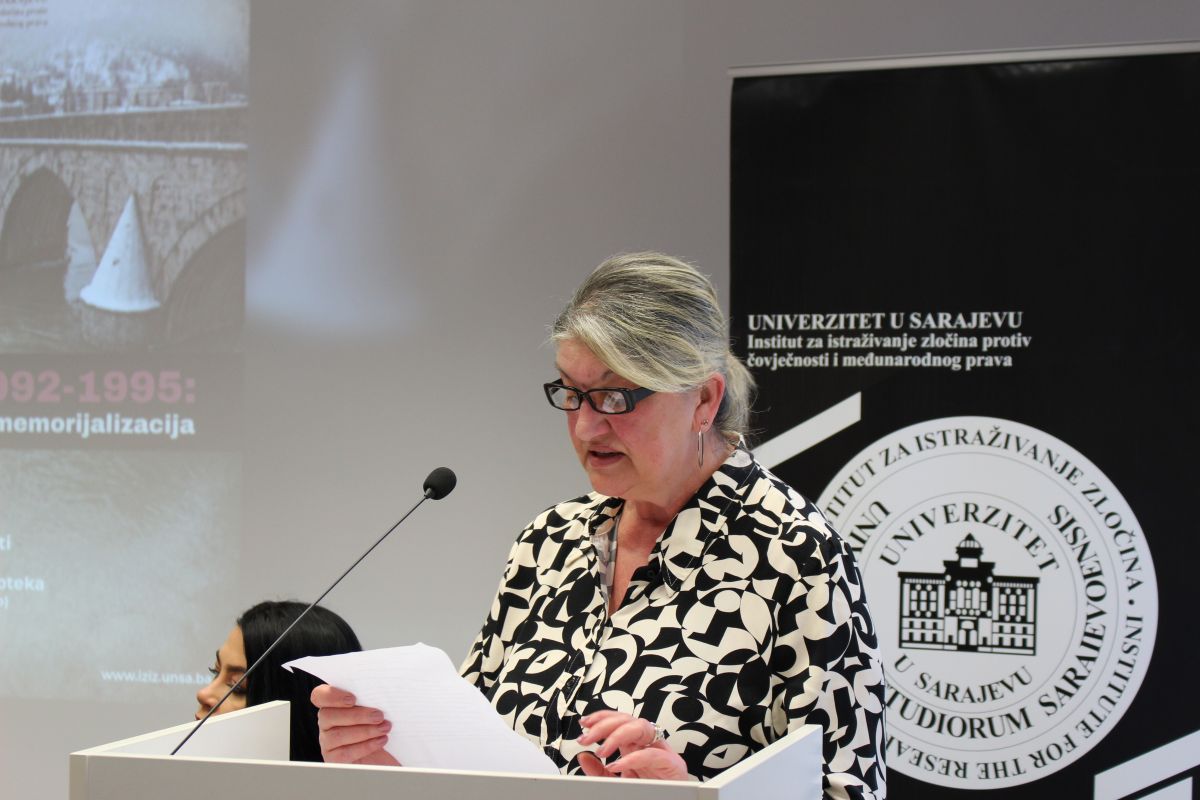
In the working segment of the gathering, participants discussed various aspects of the crimes committed in Višegrad, their consequences, as well as the importance of memorialization and the preservation of truth.
Dr. Zilha Mastalić Košuta (Zilha Mastalić Košuta), Senior Research Associate at the Institute, presented a historical analysis of crimes in Višegrad during the Second World War and their consequences, pointing to the continuity of violence against Bosniaks in that area.
Prof. Dr. Ermin Kuka (Ermin Kuka), Scientific Advisor at the Institute, spoke about the chronology of crimes against Bosniaks of Višegrad from 1992 to the end of 1995, recalling the scale of systematic persecution, killings, and the burning alive of civilians in Pionirska Street and on Bikavac.
Professor of the Faculty of Law, University of Sarajevo, Prof. Dr. Ehlimana Memišević (Ehlimana Memišević), spoke about crimes and the prosecution of rape and sexual violence against Bosniak women in Bosnia and Herzegovina, emphasizing the importance of documentation and legal accountability for these crimes.
Emza Fazlić from the Missing Persons Institute of Bosnia and Herzegovina (Institute for Missing Persons of Bosnia and Herzegovina) presented data on missing persons from the Višegrad area, as well as the challenges in the processes of tracing missing persons and identifying victims. She stated that so far, 1,015 missing persons from the Višegrad area have been verified, including 256 women and 68 children. Exhumations of victims in the Višegrad area have been carried out at more than 130 locations, within which 23 mass graves have been opened.
Dr. Medina Mehmedović-Mulalić (Medina Mehmedović-Mulalić) from the Directorate for Foreign Affairs and Diaspora of the Riyasat of the Islamic Community in Bosnia and Herzegovina spoke about the destruction and demolition of mosques and other religious objects of the Islamic Community in the Višegrad area.
During the meeting, it was emphasized that numerous facts about crimes committed in Višegrad have been established before the International Criminal Tribunal for the former Yugoslavia in The Hague, the Court of Bosnia and Herzegovina, and other courts. For crimes committed in the Višegrad area during the aggression against the Republic of Bosnia and Herzegovina from 1992 to 1995, 32 individuals have so far been finally convicted in 35 cases, receiving a total of 462 years in prison, including one life sentence.



(2).png)
(3).png)
.png)