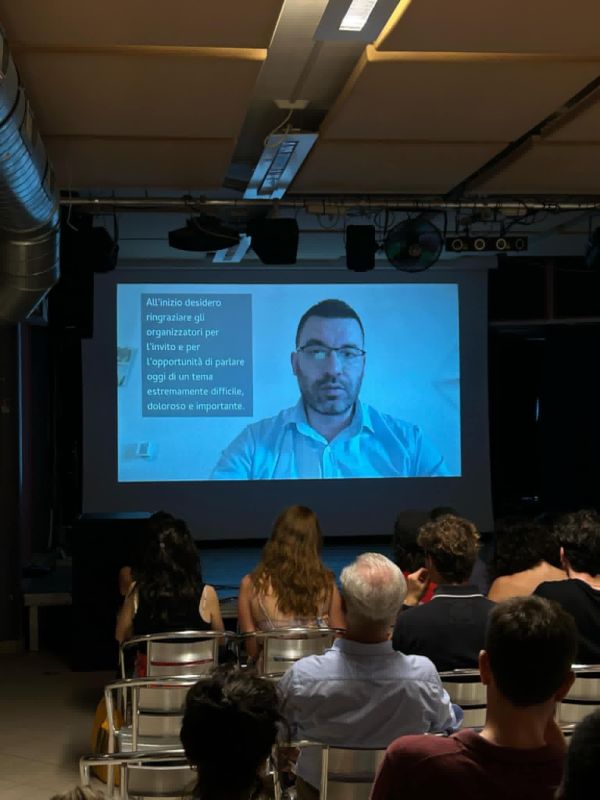
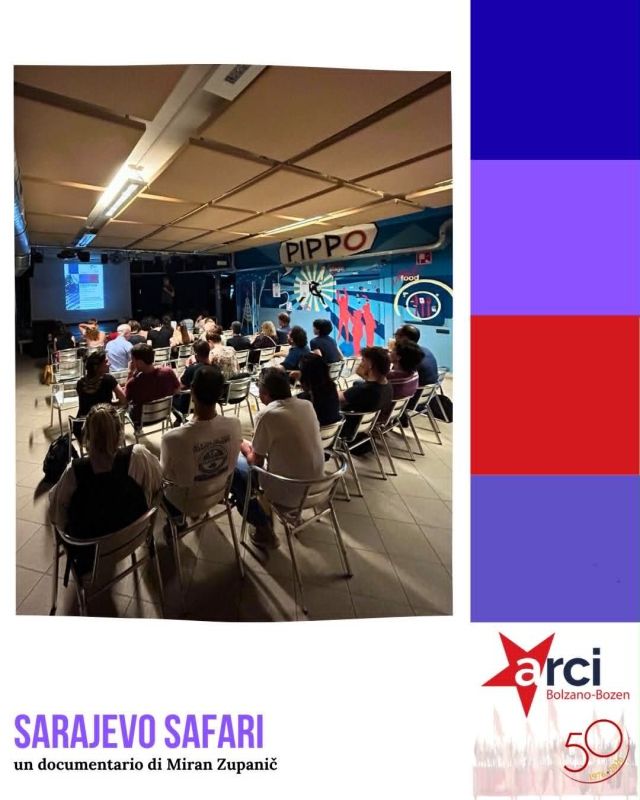
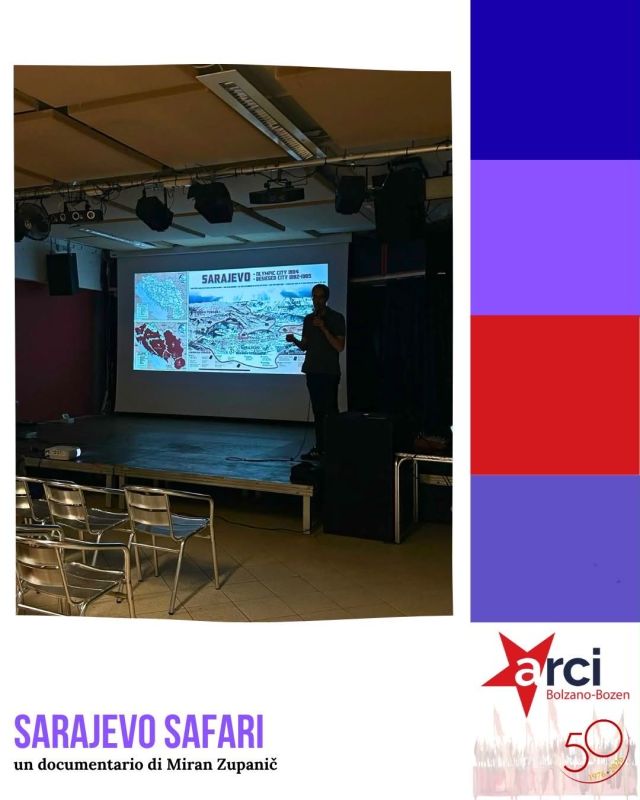
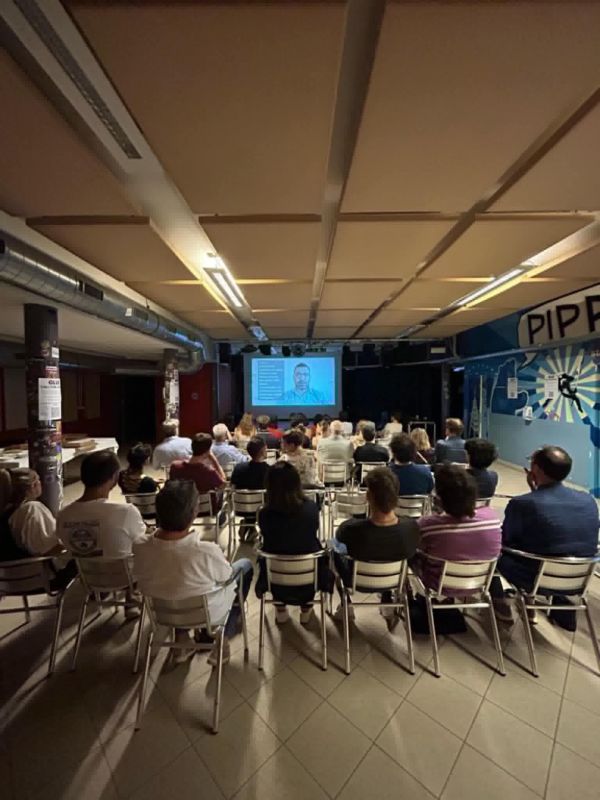
As part of the Sarajevo Safari programme organised by the Italian ARCI Bolzano Foundation, the documentary film Sarajevo Safari was screened, followed by panel discussions and expert presentations devoted to the siege of Sarajevo, the sniper campaign against civilians, and the phenomenon publicly known as "Sarajevo Safari." The programme was held over two evenings at Pippo Foodchillstage in Bolzano and at Coworking della Memoria in Merano. Participants had the opportunity to discuss one of the current cases relating to the siege of Sarajevo and the so-called "Sarajevo safaris," involving Italy and other European countries.
As part of the programme, Dr. Muamer Džananović, Director of the Institute for Research of Crimes Against Humanity and International Law at the University of Sarajevo, addressed the audience via video link. In his presentation, Dr. Džananović emphasised that the phenomenon known as "Sarajevo Safari" cannot be viewed in isolation from the broader system of the siege of Sarajevo but must instead be understood as part of a wider campaign of terror that included shelling, sniper attacks, starvation, and the daily violence inflicted upon the civilian population of the capital of the Republic of Bosnia and Herzegovina.
Dr. Džananović stressed that this phenomenon requires a thorough investigation and criminal prosecution. He emphasised that it is not sufficient to investigate only those who paid to travel from Italy and other countries to participate in shootings, but also all those who enabled such acts, including the individuals and structures that brought them to military positions, provided them with access to weapons and operational areas, and were aware of what was taking place.
Speaking about the historical and political context of the siege of Sarajevo, Dr. Džananović recalled that Sarajevo was not a random target. As the capital of the internationally recognised Republic of Bosnia and Herzegovina, Sarajevo represented the political, cultural, administrative, and symbolic centre of the state. For this reason, its siege was not merely a military operation but also a strategic and political undertaking.
The presentation further emphasised that the siege of Sarajevo forms part of European history and unfolded before the eyes of the international community. Consequently, the siege of Sarajevo, the broader aggression against the Republic of Bosnia and Herzegovina, the killing of civilians, the campaign of sniper terror, and the phenomenon known as "Sarajevo Safari" should not be regarded solely as issues concerning Bosnia and Herzegovina. They also raise broader questions of European responsibility, justice, respect for victims, human dignity, and the future.
Dr. Džananović expressed his gratitude to the ARCI Bolzano Foundation for its continued interest in Bosnia and Herzegovina, the culture of remembrance, the truth about the Srebrenica genocide, the siege of Sarajevo, and other crimes committed during the aggression against the Republic of Bosnia and Herzegovina. He highlighted the particular importance of the Foundation's efforts to connect local memories with European responsibility through its programmes while engaging younger generations in education, research, and processes of confronting the past.
The ARCI Bolzano Foundation actively contributes to social inclusion and to the development and preservation of a culture of remembrance. Among its most significant initiatives is the Srebrenica 30 project, dedicated to documenting the truth and preserving the memory of the genocide committed against Bosniaks in and around Srebrenica in 1995.
(2).png)
(3).png)
.png)