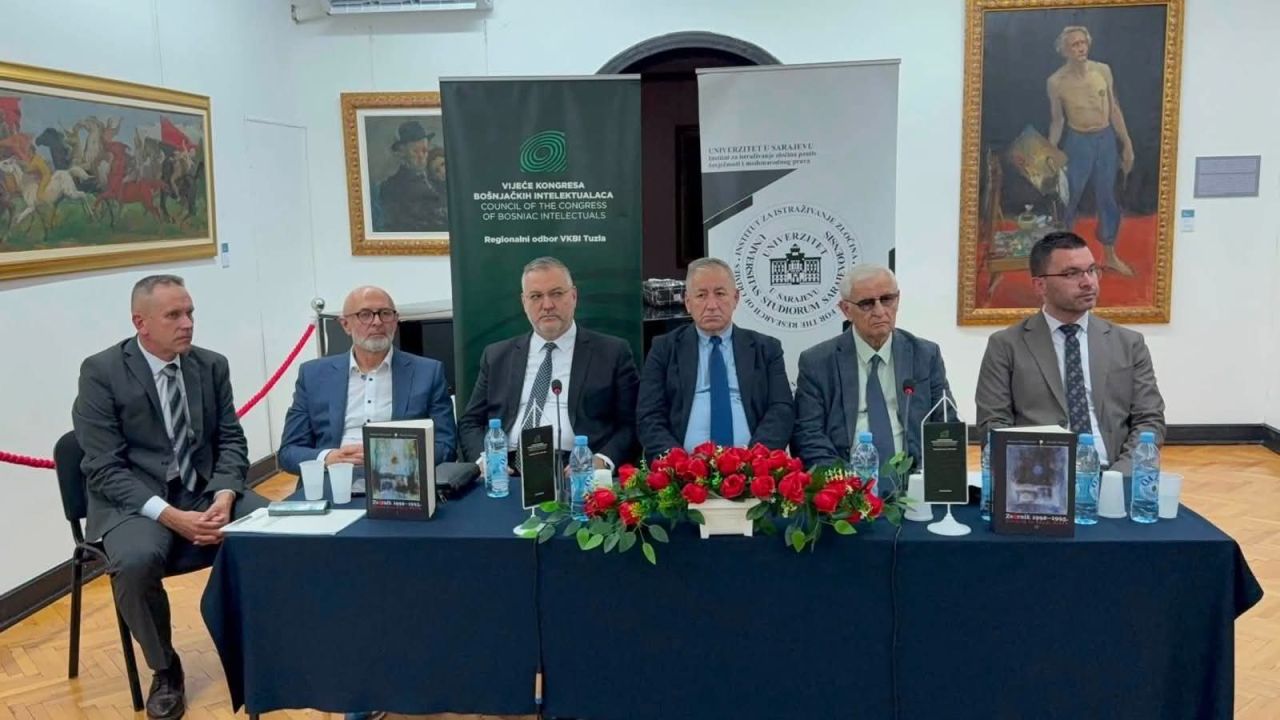
The book Zvornik 1992–1995: Genocide at the Gateway to Bosnia, authored by Muamer Džananović and Elvedin Mulagić, was presented in Tuzla last night. Based on years of academic research, the publication documents crimes committed in Zvornik during the aggression against Bosnia and Herzegovina between 1992 and 1995.
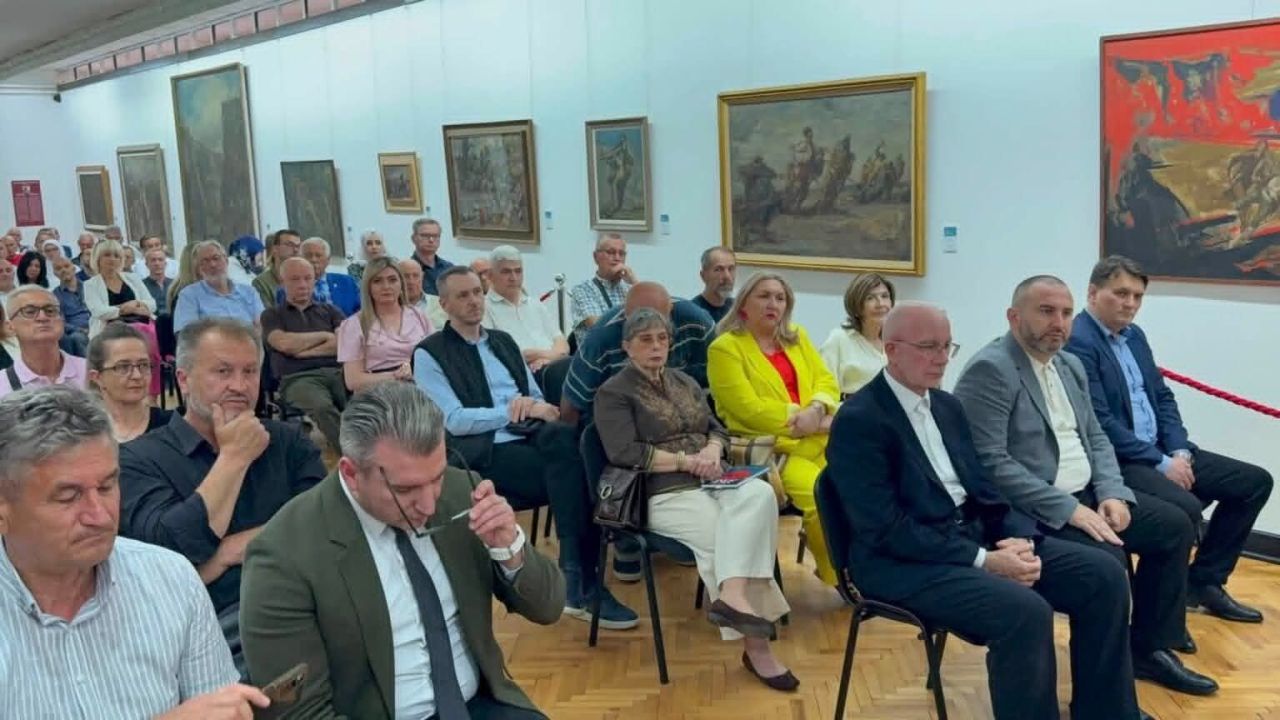
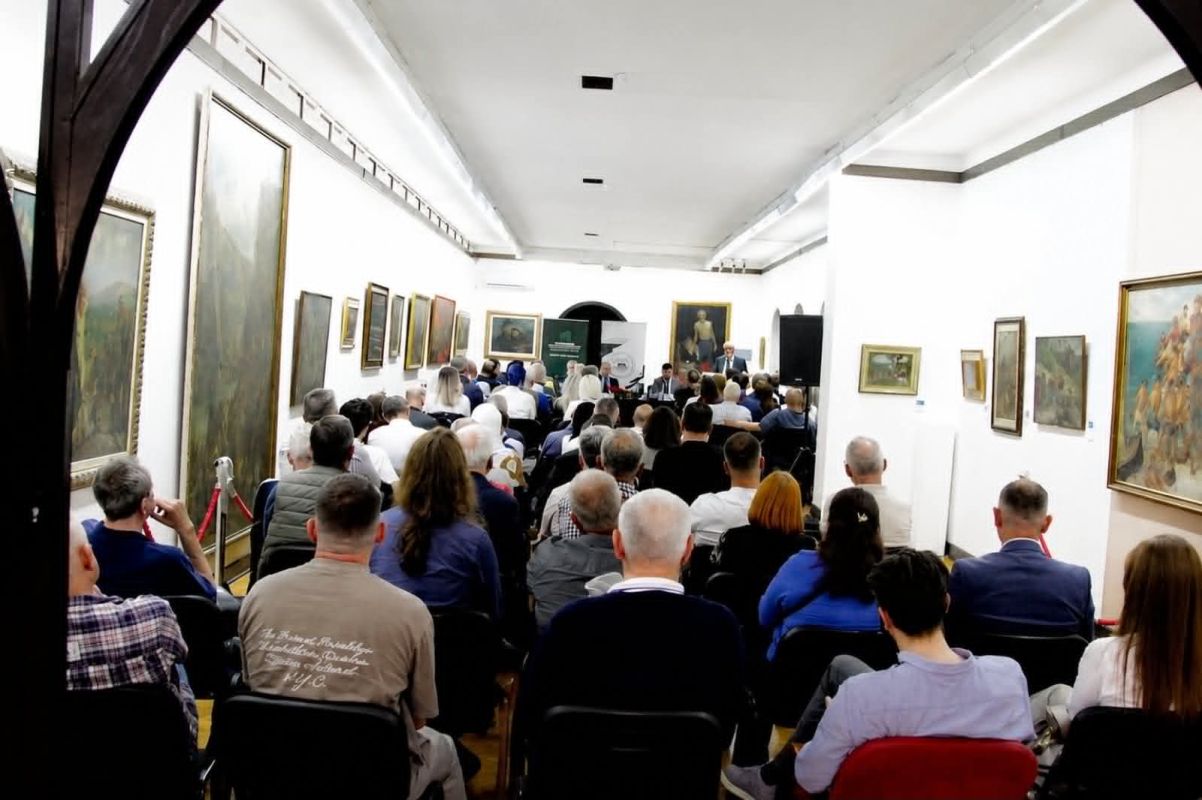
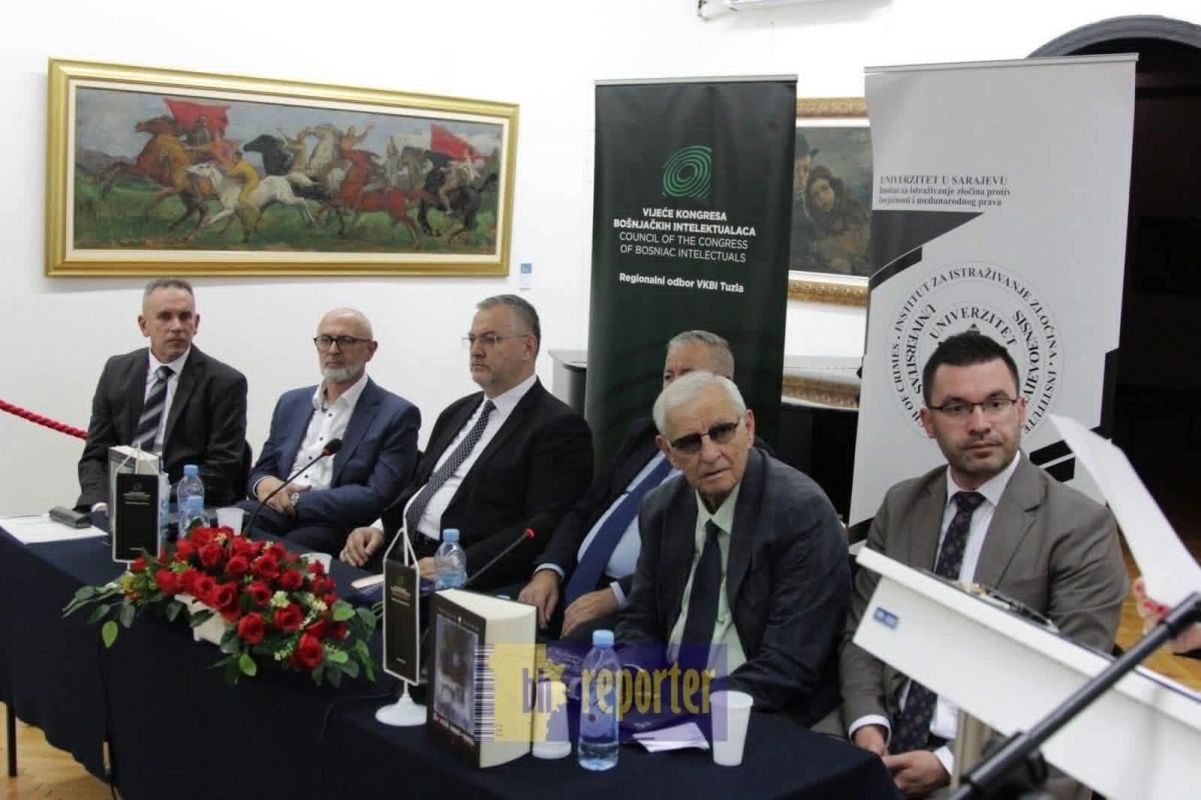
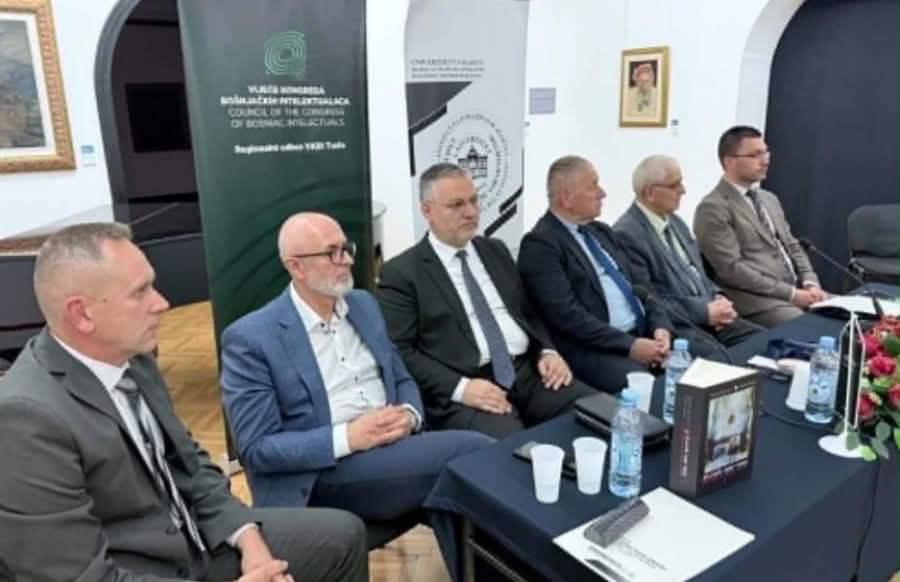
The event was held in a packed hall at the International Portrait Gallery and was organized by the University of Tuzla, the Institute for Research of Crimes Against Humanity and International Law of the University of Sarajevo, and the Tuzla and Middle Podrinje regional branches of the Council of the Congress of Bosniak Intellectuals.
Speakers highlighted the significance of the publication, including Prof. Dr. Amir Karić, Rector of the University of Tuzla; Academician Mirko Pejanović, Vice President of the Academy of Sciences and Arts of Bosnia and Herzegovina; Prof. Dr. Elmir Jahić, Professor at the Faculty of Medicine of the University of Tuzla and Director of the Medical Institute Bayer; and Prof. Dr. Sead Selimović, Professor at the Faculty of Philosophy of the University of Tuzla.
Professor Amir Karić described the publication as a landmark academic study, emphasizing that it had received the prestigious Hasan Kaimija Award a day earlier as the best work in the fields of humanities and social sciences published over the past two years. He noted that the recognition was fully deserved.
Academician Mirko Pejanović said the book represents a landmark contribution to the study of war crimes and genocide, highlighting its scope, research methodology, and scholarly approach as unique in the field.
Speaking about the publication, Zvornik native Professor Elmir Jahić described it as a major contribution to the study of war crimes and genocide. He stressed that its importance lies not only in the significance of its subject matter but also in the scale and methodology of the research on which it is based.
Referring to the fact that the book is the result of a decade of scholarly work—including more than 200 recorded video interviews, several thousand questionnaires, and extensive documentary material—Jahić said these sources made it possible to produce a comprehensive and credible study.
"What is particularly important is that it would no longer be possible today to collect testimonies and documentation in the same way as was done for this research. Many of the people who provided statements are no longer alive, which gives this book additional value and credibility," Jahić said.
Professor Sead Selimović assessed the publication as the most comprehensive academic analysis of events in Bosnia's Podrinje region during the aggression against Bosnia and Herzegovina. He noted that, across two volumes, the authors systematically examine the causes of the war, the course of the aggression, and its consequences, with particular focus on the activities of political, military, and police structures involved in implementing policies of persecution against the non-Serb population.
"The authors also provide comprehensive documentation on the destruction of Islamic religious sites, as well as the names of all those killed in the municipality of Zvornik—a total of 2,472 people, including 379 who were killed in Srebrenica during the genocide against Bosniaks in the UN-designated Safe Area of Srebrenica. In addition, they identify the individuals who formulated these policies and demonstrate that all decisions adopted by the self-proclaimed parallel institutions were illegal and aimed at the killing and expulsion of civilians from the area," Selimović said.
The book's authors, Dr. Muamer Džananović, Director of the Institute, and Dr. Elvedin Mulagić, thanked attendees for the strong turnout and support, noting that the Tuzla promotion held special significance because of the city's proximity to Zvornik and the large number of survivors, victims' families, and displaced residents of Zvornik who now live in the area.
They spoke about the motivation behind the project, emphasizing that its primary goal was to scientifically investigate, document, and preserve the memory of the crimes committed in Zvornik. They also highlighted the many challenges encountered during the years-long research process, from collecting testimonies and documentary evidence to conducting fieldwork and ensuring that the experiences of victims, survivors, and their families were presented with dignity, accuracy, and academic rigor.
(2).png)
(3).png)
.png)