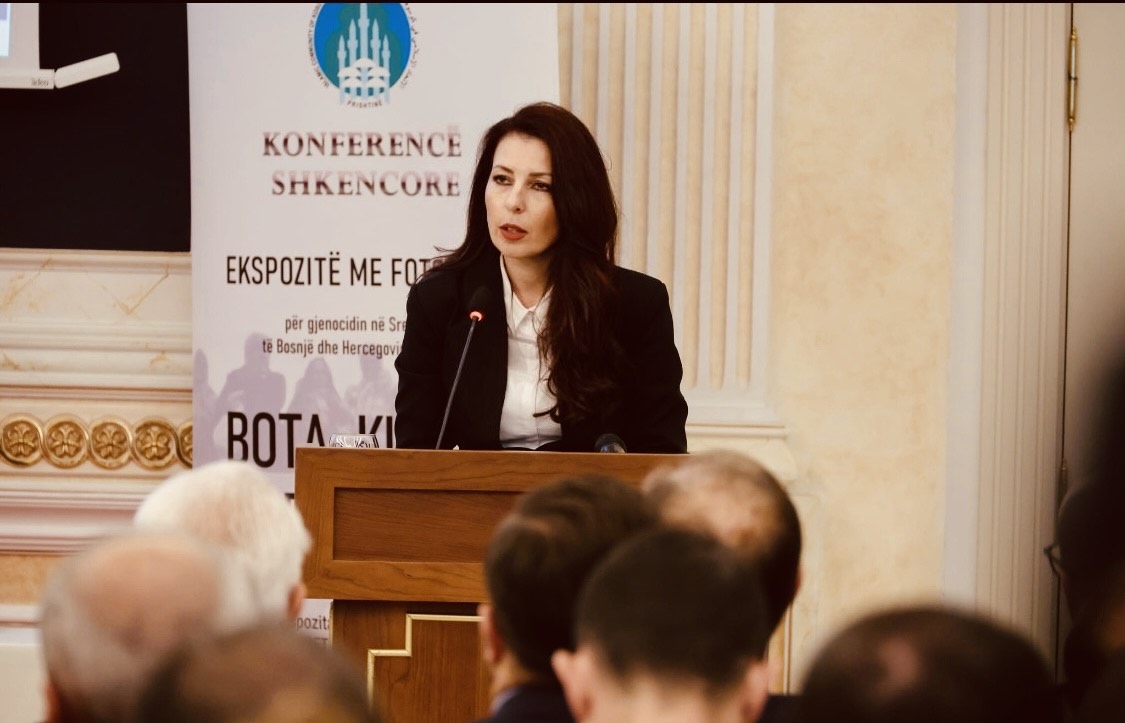
Dr. Zilha Mastalić Košuta, Senior Research Associate at the Institute for Research of Crimes Against Humanity and International Law, University of Sarajevo, gave an interview to the *Association des Professeurs d'Histoire et de Géographie* (APHG), the journal published by the French Association of History and Geography Teachers. The interview appeared in Issue No. 117 and was dedicated to the thirtieth anniversary of the end of the war in Bosnia and Herzegovina.
The interview, conducted by Dr. Aline Cateux, is published below in English translation.
**1. Aline Cateux:** *How can Serbian (SAOs and later Republika Srpska) and Croatian ethno-nationalism be distinguished through their secessionist positions and actions?*
**Zilha Mastalić Košuta:** Serbian ethno-nationalism, institutionalised first through the Serbian Autonomous Oblasts (SAOs), then through the Serbian Republic of Bosnia and Herzegovina, and subsequently Republika Srpska, possessed an openly declared secessionist character from the very outset. Its political objective was clearly and unequivocally defined: the separation of parts of the territory of Bosnia and Herzegovina from its sovereign and internationally recognised constitutional order, with the intention of annexing them to the Republic of Serbia or incorporating them into the broader framework of a "Serbian state," that is, the project of a "Greater Serbia." This objective was pursued through formal political and legal acts accompanied by the massive and systematic use of armed force, including the commission of the gravest crimes, among them genocide and serious violations of international humanitarian law.
Particularly from the second half of 1991 onwards, the Serbian Democratic Party (SDS) of Bosnia and Herzegovina operated under the direct political, governmental, and military influence of the leadership of Serbia and Montenegro, including President Slobodan Milošević, with the support of nationalist political, intellectual, and religious elites. A significant role in these activities was played by the Yugoslav People's Army (JNA) and the State Security structures of the Ministry of Internal Affairs of the Republic of Serbia. Within this context, the SDS initiated a series of illegal political and institutional activities aimed at destabilising and dismantling the constitutional and legal order of the Republic of Bosnia and Herzegovina, as well as planning and preparing the crime of genocide, as evidenced by extensive documentary evidence and the relevant judgments of international courts.
With the adoption of the *Declaration on the Proclamation of the Republic of the Serbian People of Bosnia and Herzegovina* on 9 January 1992 and the *Decision on the Proclamation of the Constitution of the Serbian Republic of Bosnia and Herzegovina* on 28 February 1992, a para-state called the Republic of the Serbian People of Bosnia and Herzegovina was established on the territory of the Republic of Bosnia and Herzegovina, defined as a federal unit "within the federal state of Yugoslavia." At the session of the Assembly of the Republic of the Serbian People of Bosnia and Herzegovina held on 12 May 1992, SDS President Radovan Karadžić presented the six strategic objectives of the Serbian people in Bosnia and Herzegovina:
1. To establish a state border separating the Serbian people from the other two ethnic communities;
2. To establish a corridor between Semberija and Krajina;
3. To establish a corridor along the Drina River Valley, thereby eliminating the Drina as a border separating Serbian states;
4. To establish the border along the Una and Neretva rivers;
5. To divide the city of Sarajevo into Serbian and Bosniak sectors and establish effective state authority in both;
6. To secure access to the sea for Republika Srpska.
At the same session, the Assembly decided to establish the Army of the Serbian Republic of Bosnia and Herzegovina (VSr RBiH) and appointed Ratko Mladić as its commander. From August 1992 onwards, this military formation operated under the name Army of Republika Srpska (VRS).
This combination of political decisions and violent practices ultimately resulted in the establishment of the territorially, institutionally, and politically consolidated entity known as Republika Srpska within post-Dayton Bosnia and Herzegovina at the end of 1995.
Croatian ethno-nationalism in Bosnia and Herzegovina, embodied in the project of the Croatian Community of Herzeg-Bosnia and later the Croatian Republic of Herzeg-Bosnia, was characterised by a more indirect and tactically adaptable form of secessionism. Its secessionist aspirations were pursued through the establishment of parallel institutions, a separate legal and administrative system, and the de facto control of territory. The International Criminal Tribunal for the former Yugoslavia determined the existence of a joint criminal enterprise whose objective was the establishment of a Croatian entity in Bosnia and Herzegovina, with the possibility of its subsequent annexation to the Republic of Croatia. Unlike Republika Srpska, however, the Herzeg-Bosnia project was subjected to sustained international pressure, including political sanctions, diplomatic interventions, and military engagement, ultimately resulting in its formal dismantling through the Washington Agreement and the Dayton Peace Agreement. Herzeg-Bosnia never attained the degree of international legitimacy, institutional stability, or long-term political sustainability achieved by Republika Srpska.
In its legislation, regulations, and subordinate legal acts concerning the Republic of Bosnia and Herzegovina, the Republic of Croatia consistently emphasised that Bosnia and Herzegovina was a sovereign, independent, internationally recognised, and territorially integral state. In practice, however, it pursued a markedly different policy. In reality, this amounted to a covert policy towards Bosnia and Herzegovina—a policy of double standards—with one official policy and another secret policy that proved detrimental to the Republic of Bosnia and Herzegovina and all of its peoples. Zagreb pursued this dual-track approach by formally accepting virtually every proposal put forward by the international community, often becoming among the first to sign international agreements. At the same time, however, it implemented a different, covert policy on the ground.
**2. Aline Cateux:** *In what context were the Croatian Community of Herzeg-Bosnia and the Croatian Community of Bosnian Posavina established, and later the Croatian Republic of Herzeg-Bosnia? Who were the principal actors, and what were their objectives?*
**Zilha Mastalić Košuta:** The projects of the Croatian Community of Herzeg-Bosnia (HZHB), the Croatian Community of Bosnian Posavina, and later the Croatian Republic of Herzeg-Bosnia (HRHB), emerged in the context of the disintegration of the Socialist Federal Republic of Yugoslavia, the weakening of the federal constitutional order, and the rise of ethno-national political elites in the early 1990s. These processes intensified following the introduction of the multi-party system and the first democratic elections in Bosnia and Herzegovina on 18 November 1990, which resulted in profound political polarisation along ethnic lines.
A particularly significant role in this process was played by the Presidents of the Republic of Croatia and the Republic of Serbia, Franjo Tuđman and Slobodan Milošević, who from 1990 onwards openly expressed territorial aspirations towards Bosnia and Herzegovina. Their political concepts, based on the ethnic principle and the idea of the "delimitation of peoples," envisaged the partition of Bosnia and Herzegovina between Croatia and Serbia. Within this framework, Bosnia and Herzegovina was not regarded as a sovereign political entity but rather as a territory for the realisation of the national projects of its neighbouring states.
Tuđman believed that the partition of Bosnia and Herzegovina would provide a permanent solution to Croatian-Serbian territorial disputes and prevent a possible armed conflict between Croatia and Serbia. In his plans, population redistribution and the ethnic homogenisation of territory were regarded as legitimate means of achieving long-term stability. This approach disregarded the political and demographic realities of Bosnia and Herzegovina, where, according to the 1991 population census, Bosniaks (then officially designated as Muslims by nationality) constituted the largest single ethnic group, accounting for 47% of the population. The 1991 census recorded a total population of 4,377,033, including 1,902,956 Muslims (Bosniaks) (47%), 1,366,104 Serbs (31.21%), 760,852 Croats (17.38%), 242,682 Yugoslavs (5.54%), and 104,439 persons belonging to other groups (2.38%).
Parallel to the establishment of the Serbian Autonomous Oblasts (SAOs), the leadership of the Croatian Democratic Union of Bosnia and Herzegovina (HDZ BiH) initiated efforts to establish Croatian political-territorial entities within Bosnia and Herzegovina, with substantial political, institutional, and logistical support from the Republic of Croatia. President Franjo Tuđman, in cooperation with the leadership of the HDZ in both Croatia and Bosnia and Herzegovina, worked towards the gradual implementation of a project aimed at creating a Croatian political entity whose ultimate objective was its separation from Bosnia and Herzegovina and eventual incorporation into the Republic of Croatia. Following discussions and political agreements with Slobodan Milošević during 1991, these plans entered their operational phase. Prominent political actors from Bosnia and Herzegovina involved in this process included Mate Boban, Dario Kordić, and Ignac Koštroman. As a result of these activities, the Croatian Community of Bosnian Posavina was proclaimed in Bosanski Brod on 12 November 1991, followed by the Croatian Community of Herzeg-Bosnia in Grude on 18 November 1991.
The Croatian Community of Herzeg-Bosnia (HZHB) was conceived as a political-territorial entity with clearly expressed aspirations towards the ethnic homogenisation of territory and institutional separation from Bosnia and Herzegovina. Although it was formally presented as a form of political autonomy within Bosnia and Herzegovina, numerous documentary sources and political statements indicate that one of the realistic options considered by its leadership was secession and accession to the Republic of Croatia. HZHB gradually developed the characteristics of a para-state: parallel governmental institutions were established, together with a separate legal system and its own military (the Croatian Defence Council – HVO), police, financial, customs, educational, and economic structures, largely modelled on those of the Republic of Croatia. In this way, a parallel system was created that functioned outside the constitutional and legal order of the Republic of Bosnia and Herzegovina.
The establishment and activities of Herzeg-Bosnia pursued a clear political and military objective: the dismantling of the institutions of the Republic of Bosnia and Herzegovina and the seizure of its territory.
The Constitutional Court of the Republic of Bosnia and Herzegovina ruled that the legal acts establishing and regulating the Croatian Community, and subsequently the Croatian Republic of Herzeg-Bosnia, were contrary to the Constitution of the Republic of Bosnia and Herzegovina and declared them unconstitutional and unlawful. Nevertheless, the political leadership of Herzeg-Bosnia, acting in coordination with the authorities of the Republic of Croatia, continued implementing its own political decisions while disregarding the decrees of the Presidency and Government of the Republic of Bosnia and Herzegovina, as well as the instructions of the competent ministries.
The international community strongly criticised the proclamation of Herzeg-Bosnia, assessing that such actions further destabilised Bosnia and Herzegovina and confirmed the intentions of Croatia and Serbia to partition the country. It was particularly emphasised that such para-state structures constituted a threat to international law and to the principle of the territorial integrity of internationally recognised states.
At a session of the Representative Assembly of HZHB held in Grude on 28 August 1993, a decision was adopted establishing the Croatian Republic of Herzeg-Bosnia, with Mostar designated as its capital. Through this act, Herzeg-Bosnia acquired the characteristics of a quasi-state, although it never obtained international recognition. The territory claimed by HRHB encompassed approximately thirty municipalities in Bosnia and Herzegovina, including large parts of Herzegovina, Central Bosnia, and western and southwestern Bosnia. Within these areas, a separate system of administration and public institutions was established that operated parallel to the institutions of the Republic of Bosnia and Herzegovina, thereby further undermining its sovereignty and territorial integrity.
**3. Aline Cateux:** *Were the acts of violence committed in the parts of Bosnia and Herzegovina under the control of the Army of Republika Srpska (VRS) and the Croatian Defence Council (HVO), respectively, against non-Serb and non-Croat civilians, different in nature?*
**Zilha Mastalić Košuta:** In both cases, the acts in question constituted serious violations of international humanitarian law and crimes committed against the civilian population. In areas under the control of both the VRS and the HVO, violence was directed against civilians on the basis of their ethnic identity and was employed as an instrument of territorial control and political restructuring. As such, it unequivocally falls within the categories of war crimes and crimes against humanity.
In its judgments in *Prlić et al.*, *Stanišić and Simatović*, and numerous other cases, the International Criminal Tribunal for the former Yugoslavia (ICTY) established the existence of joint criminal enterprises (JCEs) in which the highest political and state leaderships of the Republic of Croatia and the Federal Republic of Yugoslavia—including Presidents Franjo Tuđman and Slobodan Milošević—played central roles. The Tribunal also found that the Republic of Croatia and the Federal Republic of Yugoslavia exercised overall control over the HVO and the VRS, respectively. Consequently, the armed conflict in Bosnia and Herzegovina was legally characterised as an international armed conflict involving the direct participation of the Croatian Army and the Yugoslav Army.
On this basis, the ICTY concluded that the policies of Serbia and Croatia were directed towards the occupation and control of parts of the territory of Bosnia and Herzegovina with the objective of creating large ethnically homogeneous states. The ethnic restructuring of the population was regarded as a means of achieving this objective. Crimes committed against civilians—including persecution, deportation, unlawful detention, murder, rape, and other serious violations of international humanitarian law—formed an integral part of the implementation of these political and territorial projects.
The ICTY did not charge officials of the Croatian state, the HVO, or the Croatian Republic of Herzeg-Bosnia with the crime of genocide. By contrast, from its establishment onward, the Tribunal's indictments against the political and military leadership of Serbia, Republika Srpska, and the Army of Republika Srpska included charges of genocide, beginning with the indictment against Serbian President Slobodan Milošević and culminating in the final judgments against Radovan Karadžić, President of Republika Srpska, and Ratko Mladić, Commander of the Army of Republika Srpska.
The difference in the legal characterisation of these crimes stems primarily from the established differences in their scale, territorial scope, and degree of organisation within the respective joint criminal enterprises. The plans and objectives of the Serbian leadership, together with those of its agents in Bosnia and Herzegovina (the VRS and Republika Srpska), encompassed a substantially larger portion of the state's territory and involved a higher degree of institutional coordination and systematic implementation of violence than was the case with the Croatian project and its agents (the HVO and the Croatian Republic of Herzeg-Bosnia). In this sense, it is possible to speak of a quantitatively greater, territorially more extensive, and organisationally more systematic pattern of criminal conduct in the case of the Serbian project.
However, apart from the difference concerning the existence of genocidal intent—as established by the ICTY—there is no fundamental difference in the nature of the criminal systems that operated in Bosnia and Herzegovina through joint criminal enterprises. In both cases, the violence was planned, politically directed, and perpetrated against the civilian population with the objective of permanently altering the ethnic composition of the territory and undermining the sovereignty of Bosnia and Herzegovina.
**4. Aline Cateux:** *How would you describe the lives of non-Croat civilians in the territory under the control of the HVO and the HDZ?*
**Zilha Mastalić Košuta:** This section presents three case studies illustrating grave crimes committed against Bosniak civilians by the Croatian Defence Council (HVO), with the participation of the Croatian Army (HV) in Bosnia and Herzegovina. The events in the village of Ahmići (Municipality of Vitez), the village of Stupni Do (Municipality of Vareš), and the city of Mostar exemplify patterns of planned crimes against civilians and the establishment of territorial control through systematic violations of international humanitarian law.
### Ahmići (Municipality of Vitez)
Ahmići is a village in Central Bosnia located along the strategically important Sarajevo–Travnik–Zenica road. According to the 1991 population census, the village had 466 inhabitants, of whom 76.4% were Bosniaks. By April 1993, more than 300 forcibly displaced Bosniaks from surrounding areas had also taken refuge in the village.
In the early morning hours of 16 April 1993, HVO units launched a coordinated and premeditated attack on Ahmići, as well as on other Bosniak settlements in the Lašva Valley and the town of Vitez. The decision to carry out the attack was taken during a meeting of the HVO Central Bosnia Operational Zone Command in Busovača on the night of 15–16 April 1993, attended, among others, by Dario Kordić and Tihomir Blaškić, both of whom were subsequently convicted by the International Criminal Tribunal for the former Yugoslavia (ICTY).
The assault began with intensive artillery shelling designed to prevent the civilian population from fleeing northwards, while escape routes to the south had already been blocked by HVO ambushes. HVO forces then systematically entered the village in small groups, killing civilians with firearms and hand grenades and setting houses on fire. Many residents were murdered inside their homes or immediately after being forced to leave them.
A total of 116 people were killed in Ahmići, including a large number of women, children, elderly persons, and even infants. Approximately 180 Bosniak houses and two mosques were completely destroyed, while Croatian-owned houses were largely left untouched. International observers and United Nations field investigators documented the extent of the destruction and the mass killings, confirming that there were no military objectives or organised armed resistance in the village. Dario Kordić, Tihomir Blaškić, Paško Ljubičić, and other members of the HVO were convicted before the ICTY for crimes committed in Ahmići. The massacre in Ahmići remains one of the gravest and most thoroughly documented crimes committed against the Bosniak population during the war in Bosnia and Herzegovina.
### Stupni Do (Municipality of Vareš)
The village of Stupni Do, in the Municipality of Vareš, was a Bosniak settlement subjected to pressure and threats from the HVO throughout 1993. In June of that year, residents received an ultimatum demanding that they surrender their weapons under threat of attack. Although many villagers temporarily fled, they returned to their homes after no immediate attack followed. The village was protected only by an improvised local guard, poorly armed and lacking adequate military training.
On the morning of 23 October 1993, HVO forces attacked Stupni Do using artillery, infantry weapons, and incendiary ammunition. After taking control of the village, members of HVO special units systematically looted property, killed civilians, and burned houses together with their occupants. The village was almost entirely destroyed: fifty-two houses were burned, and thirty-eight people were killed, most of them civilians, including women and children. The Likić family suffered particularly devastating losses, with thirty-four of its members killed.
Following the attack, the HVO obstructed access by international forces and observers, while the political leadership of Herzeg-Bosnia attempted to minimise or deny the scale of the crimes. Ivica Rajić and other HVO members were convicted by the ICTY for crimes committed in Stupni Do, while the senior political leadership of Herzeg-Bosnia was later convicted for participation in a joint criminal enterprise.
### Mostar
Following the HVO attack on the eastern part of Mostar on 9 May 1993, an area under the control of the 4th Corps of the Army of the Republic of Bosnia and Herzegovina (ARBiH), the city was effectively divided, and the Bosniak population of East Mostar found itself under a prolonged siege.
During the siege, which lasted from May 1993 until April 1994, civilians were subjected to continuous artillery shelling, sniper fire, and the complete blockade of essential resources, including food, water, electricity, and medical assistance. Throughout this period, numerous civilians—including many children—were killed or wounded, while nearly the entire urban infrastructure of East Mostar was devastated.
At the same time, in the western part of the city under HVO control, Bosniak civilians were subjected to mass raids, arbitrary arrests, and forced displacement. Thousands of civilians were taken to collection and detention centres, including the Velež Stadium, the Heliodrom camp, and the Vojno detention facility, where they were subjected to inhuman treatment.
In addition to these detention facilities, several other camps were located near Mostar where detainees were tortured in particularly brutal ways, including Gabela (near Čapljina), Dretelj (near Čapljina), the Koštana Hospital detention facility in Stolac, Ljubuški, and others. On 9 November 1993, HVO forces destroyed Mostar's most iconic landmark—the Old Bridge (Stari Most)—through intensive artillery fire.
Even after the signing of the Washington Agreement in 1994, violence against Bosniaks in areas of Mostar under HVO control did not cease entirely. Further killings, expulsions, and systematic discrimination were documented, and in many instances those responsible were never adequately prosecuted.
During 1992, crimes were also committed against the Serb population within the territory of the Croatian Community of Herzeg-Bosnia, particularly in western Herzegovina, southwestern Bosnia, and other areas.
**5. Aline Cateux:** *How did the ICTY prosecute the leaders of Herzeg-Bosnia? How many cases were brought before the Tribunal, and what crimes were they charged with?*
**Zilha Mastalić Košuta:** In its final judgments, the International Criminal Tribunal for the former Yugoslavia (ICTY) established that between 18 November 1991 and April 1994, a joint criminal enterprise (JCE) existed and operated in the municipalities encompassed by the project of the Croatian Community, and later the Croatian Republic, of Herzeg-Bosnia. The ultimate objective of this enterprise was the establishment of a Croatian political and territorial entity within the internationally recognised state of Bosnia and Herzegovina, partly within the borders of the 1939 Banovina of Croatia, with the intention of achieving the "reunification of the Croatian people."
The ICTY found that, in the event of the disintegration of Bosnia and Herzegovina, the envisaged Croatian entity was intended either to be incorporated into the Republic of Croatia or, alternatively, to function as a formally independent political entity within Bosnia and Herzegovina while remaining closely linked to Croatia politically, institutionally, and militarily. A central role in the conception, coordination, and implementation of this common criminal objective was played by senior political and military officials of the Republic of Croatia and Herzeg-Bosnia, including Franjo Tuđman, Gojko Šušak, Janko Bobetko, Mate Boban, Jadranko Prlić, Bruno Stojić, Slobodan Praljak, Milivoj Petković, Valentin Ćorić, Berislav Pušić, and other individuals who contributed to the enterprise through coordinated action and mutual agreement.
The ICTY's final judgments further established that altering the ethnic composition of the population in the targeted areas was regarded as essential for the creation of the Croatian entity. To achieve this objective, the authorities of Herzeg-Bosnia, with direct political, military, and logistical support from the Republic of Croatia, implemented a planned and systematic campaign. In numerous municipalities under Herzeg-Bosnia's control, the gravest forms of crimes against humanity, serious violations of international humanitarian law, grave breaches of the 1949 Geneva Conventions, and violations of the laws and customs of war were committed. These included persecution on political, racial, and religious grounds, murder, rape, deportation, and the forcible transfer of civilians.
On the basis of findings of individual and command responsibility, the highest-ranking political and military officials of Herzeg-Bosnia—including Jadranko Prlić (President of the Government of Herzeg-Bosnia), Slobodan Praljak (General of the Croatian Army/HVO), Milivoj Petković (Chief of the HVO Main Staff), Bruno Stojić (Head of the Department of Defence), Valentin Ćorić (Head of the HVO Military Police Administration), Berislav Pušić, Dario Kordić, Tihomir Blaškić, Zlatko Aleksovski, Mladen Naletilić "Tuta," Vinko Martinović "Štela," Ivica Rajić, and others—were convicted by the ICTY and sentenced to lengthy terms of imprisonment.
Proceedings before the International Criminal Tribunal for the former Yugoslavia (ICTY) established the existence of an international armed conflict, specifically the participation of the Republic of Croatia in the armed conflict on the territory of Bosnia and Herzegovina between April 1993 and March 1994. The Tribunal also established the direct involvement of the Croatian Army (HV), as well as the overall control exercised by the Republic of Croatia over the political and military structures of the Bosnian Croats, including the Croatian Defence Council (HVO) and the authorities of the Croatian Community, and subsequently the Croatian Republic, of Herzeg-Bosnia. This legal issue was examined in detail and established in a number of ICTY judgments and Appeals Chamber decisions. Particularly relevant are the so-called "Lašva Valley" cases, including *Prosecutor v. Zlatko Aleksovski* (IT-95-14/1), *Prlić et al.* (IT-04-74), *Prosecutor v. Tihomir Blaškić* (IT-95-14-A), *Prosecutor v. Dario Kordić and Mario Čerkez* (IT-95-14/2-A), and *Prosecutor v. Mladen Naletilić "Tuta" and Vinko Martinović "Štela"* (IT-98-34). In these proceedings, the Tribunal found that the Republic of Croatia exercised a decisive degree of control over the HVO's military operations, command structure, logistical support, and strategic objectives. The ICTY also established the existence of a state of occupation in several municipalities within Herzeg-Bosnia.
**6. Aline Cateux:** *The idea of Herzeg-Bosnia remains very much alive today. How do you view the continued celebration of its founders and leaders?*
**Zilha Mastalić Košuta:** The Dayton Peace Agreement, signed on 14 December 1995, formally brought the war in Bosnia and Herzegovina to an end and established a constitutional framework based on the territorial division of the state into two entities. Although the Agreement ended the armed conflict, it did not eliminate the deeper political and social antagonisms that had characterised the wartime period. On the contrary, post-war political life in Bosnia and Herzegovina continued in the context of demographic changes that had already taken place as a result of mass forced displacement and the policy of so-called "humane resettlement."
Formally, the institutions and competencies of the Croatian Republic of Herzeg-Bosnia ceased to exist on 14 August 1996, when their powers were transferred to the institutions of the Federation of Bosnia and Herzegovina. However, the ideological and symbolic legacy of Herzeg-Bosnia has continued to exist in parts of the country with a predominantly Croat population, manifesting itself through political discourse, institutional practices, and public commemorative culture.
In the contemporary political context, certain political actors openly advocate reviving the Herzeg-Bosnia project. For example, Mario Karamatić, President of the Croatian Peasant Party of Bosnia and Herzegovina (HSS BiH), has publicly argued that the Croatian Republic of Herzeg-Bosnia could be re-established in the event of the secession of Republika Srpska. In recent years, similar statements calling for the creation of a "third entity" have become increasingly frequent. Such statements point to the continuity of the ethno-territorial concepts that underpinned the wartime conflict.
Beyond political demands, the idea of Herzeg-Bosnia also persists through symbolic and institutional ex
Particularly troubling is the initiative to establish a museum dedicated to the HVO at the site of the former Heliodrom detention camp. The proposed HVO Museum is intended to be housed in the building that once served as the command headquarters of the Heliodrom camp and to exhibit military and cultural-historical collections. It is evident that establishing an HVO museum at this location constitutes an act of historical revisionism and an attempt to reinterpret and falsify established historical and judicial facts. At the same time, it represents a provocation to all victims who endured the wartime detention camps in Bosnia and Herzegovina between 1992 and 1995. Such an initiative may be compared to the idea of establishing a museum dedicated to Nazi forces at the site of the Auschwitz concentration camp.
One of the most striking examples is the practice of awarding state decorations to individuals who have been convicted of, or associated with, war crimes. Decisions by the President of the Republic of Croatia, Zoran Milanović, to decorate individuals such as Ilija Nakić, who has been indicted for war crimes committed against civilians in Bosnia and Herzegovina, have provoked strong reactions among both experts and the broader public. Although such awards are formally justified by reference to wartime service or contributions to Croatia's defence, they have the effect of symbolically normalising and implicitly legitimising crimes established by judicial decisions.
A similar revisionist pattern is evident in the public statements of Dario Kordić, who was sentenced by the ICTY to twenty-five years' imprisonment for war crimes and crimes against humanity, including crimes committed in Ahmići. His assertion that he "would do it all again" constitutes an open rejection of judicially established facts and a moral reaffirmation of the crimes for which he was convicted. Particularly troubling is the fact that such statements have been met with either tacit acceptance or open tolerance by segments of Croatia's political and social establishment.
Revisionist discourse is also reflected in statements by senior political officials, including Lidija Bradara, Chair of the House of Peoples of the Parliament of the Federation of Bosnia and Herzegovina, and others, who have argued that convicted war criminals have "served their sentences," thereby implicitly suggesting that any further public or political responsibility has been exhausted. Such an approach overlooks the fact that the completion of a criminal sentence does not negate the historical truth concerning the crimes committed, nor does it diminish society's obligation to condemn them clearly and unequivocally. Through this process of symbolic reinterpretation of the past, judicially established facts are relativised, while perpetrators and organisers of war crimes are portrayed as legitimate political or military figures. In doing so, the judgments of international courts, particularly those of the ICTY, are undermined, and narratives are promoted that are contrary to established historical and legal facts.
This form of revisionism has broader political and social consequences. It hinders the process of confronting the past, deepens mistrust among communities in Bosnia and Herzegovina and the wider region, and represents an obstacle to the lasting normalisation of relations. Rather than contributing to a culture of remembrance grounded in facts and accountability, such practices promote selective memory and nationally conditioned interpretations of the wartime past. They constitute a serious challenge to the processes of dealing with the past and building sustainable peace in Bosnia and Herzegovina. They contribute to the normalisation of wartime political agendas, the relativisation of judicially established facts, and the deepening of ethnic divisions. In this context, the public glorification of the Herzeg-Bosnia project and its leading figures cannot be regarded as a neutral ex
Another significant issue concerns the protection afforded by the Republic of Croatia to fugitives from justice who hold dual citizenship of Bosnia and Herzegovina and Croatia. According to available data, at least fifty former HVO members indicted for serious violations of international humanitarian law remain at large.
Source: Historiografija.ba*
(2).png)
(3).png)
.png)