On the occasion of the 31st anniversary of the 1995 genocide against Bosniaks in and around Srebrenica, commemorative programmes were held in Novi Pazar and Rožaje, dedicated to remembering the victims of the genocide, preserving historical truth, and addressing contemporary challenges related to the denial and relativisation of the crimes committed. The programmes featured the participation of Dr Muamer Džananović, Director of the University of Sarajevo’s Institute for Research of Crimes against Humanity and International Law.
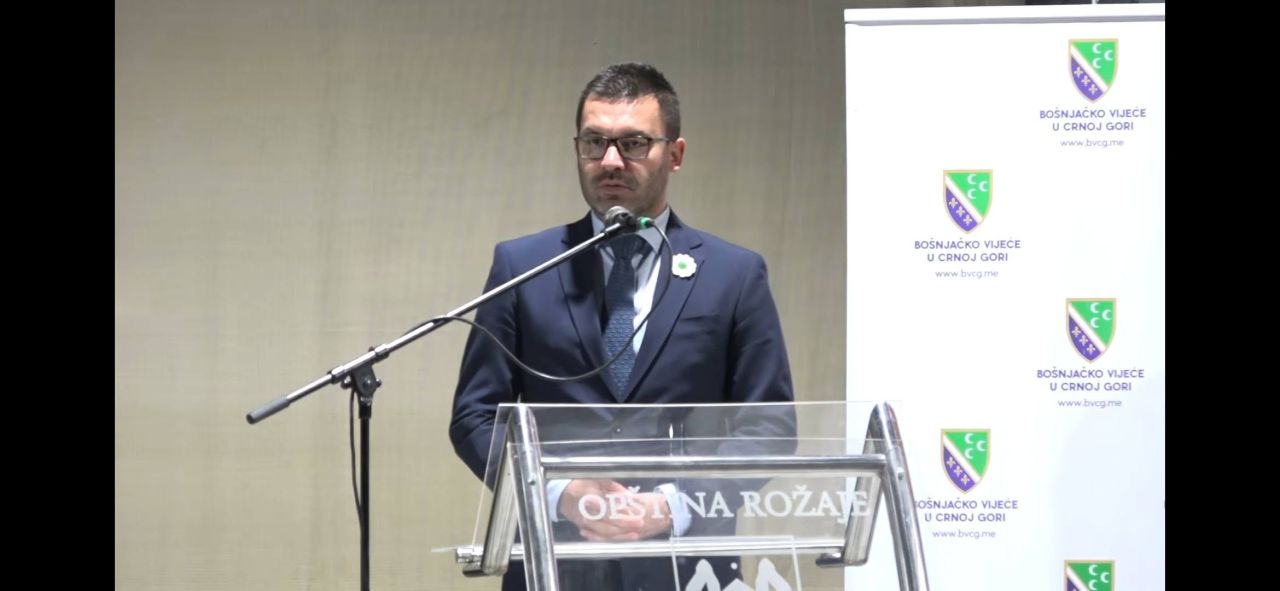
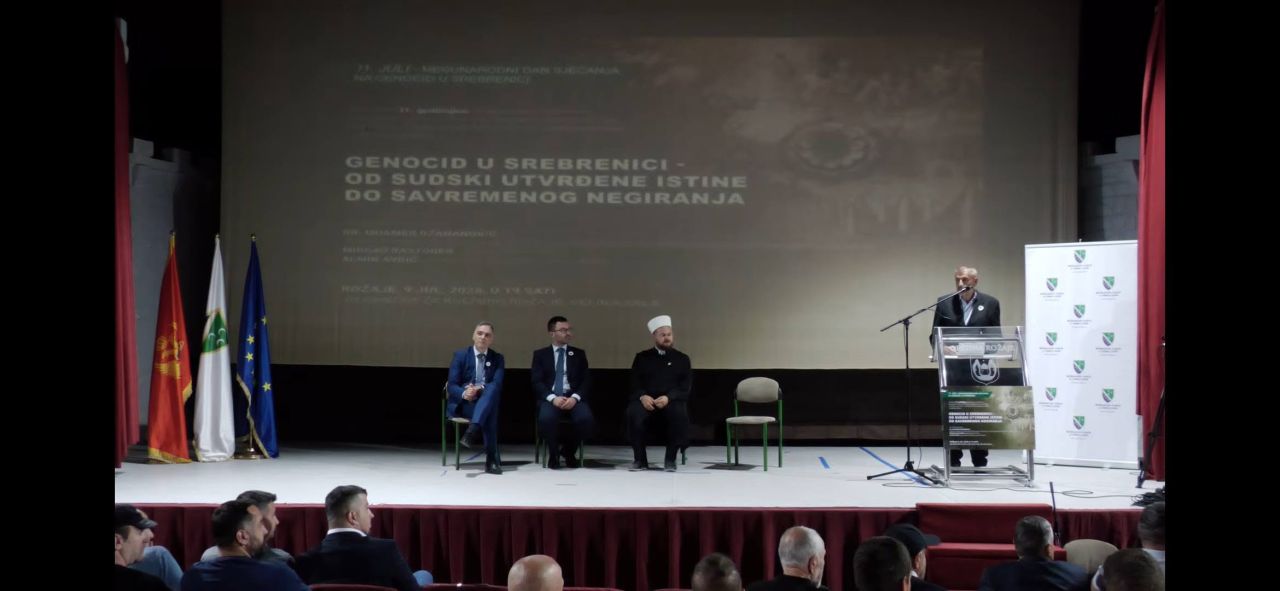
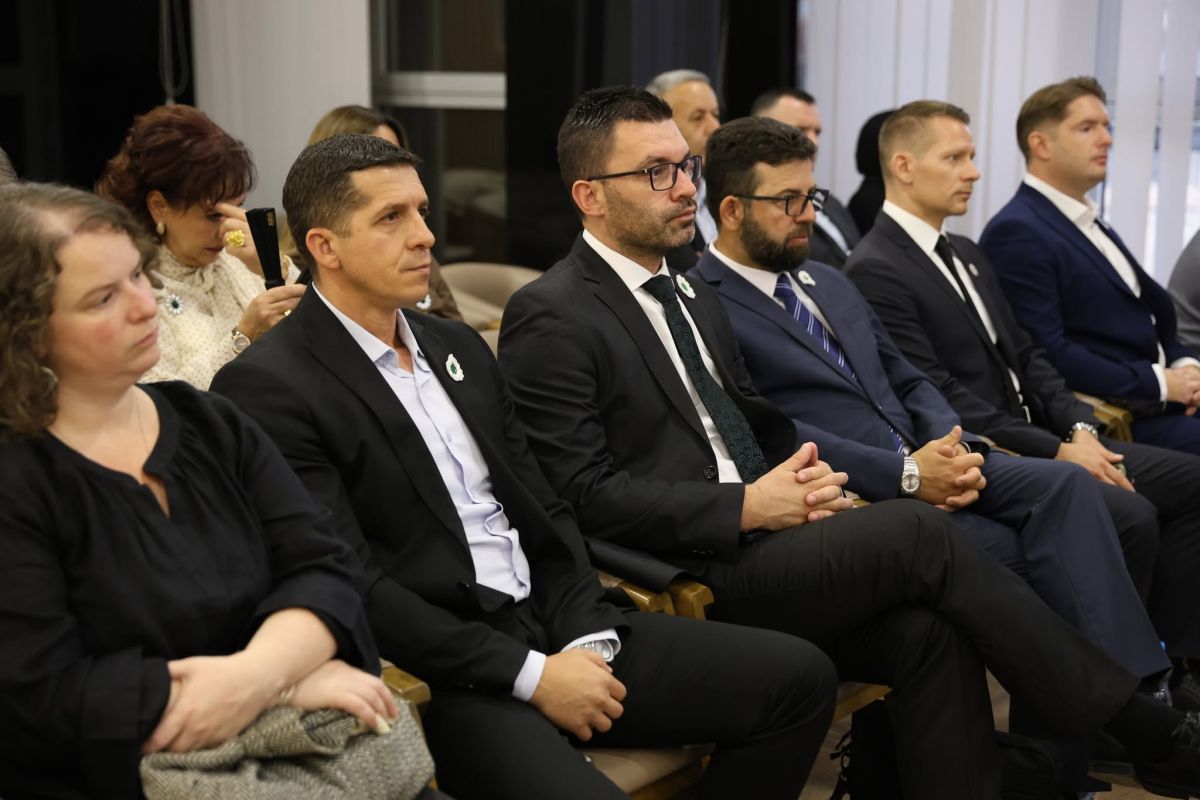
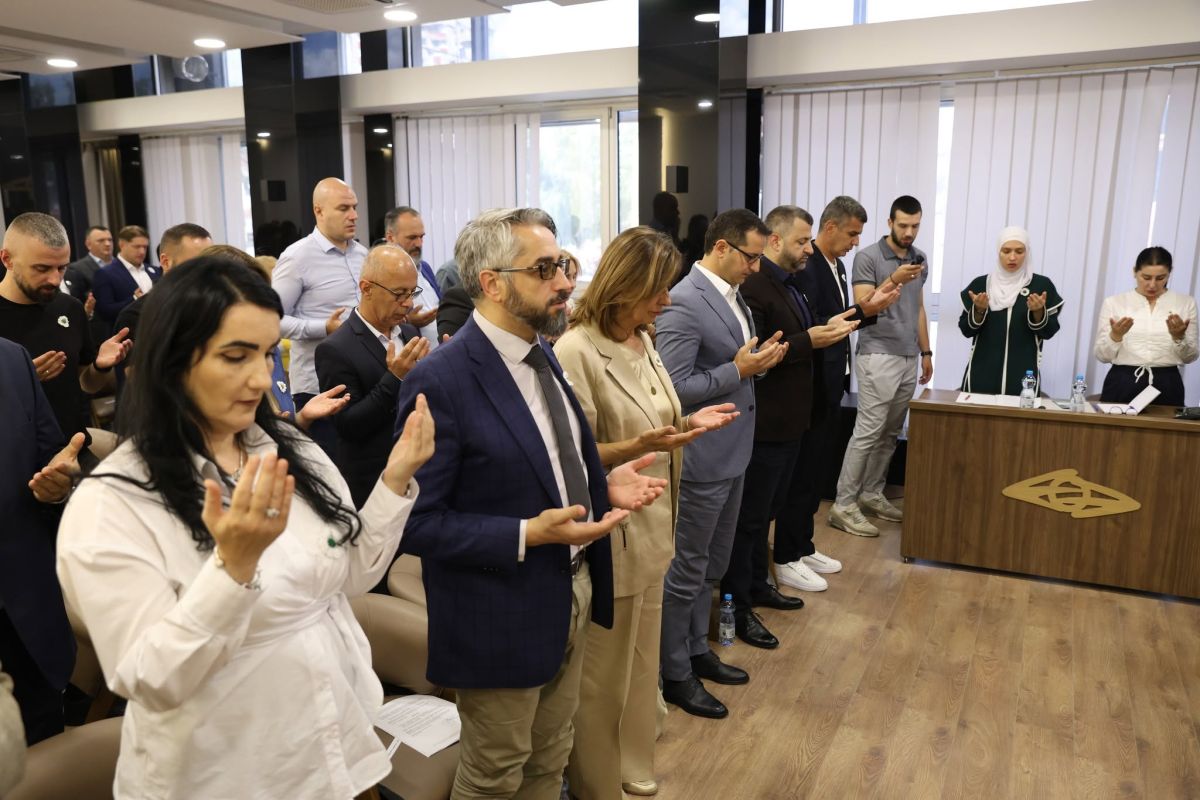
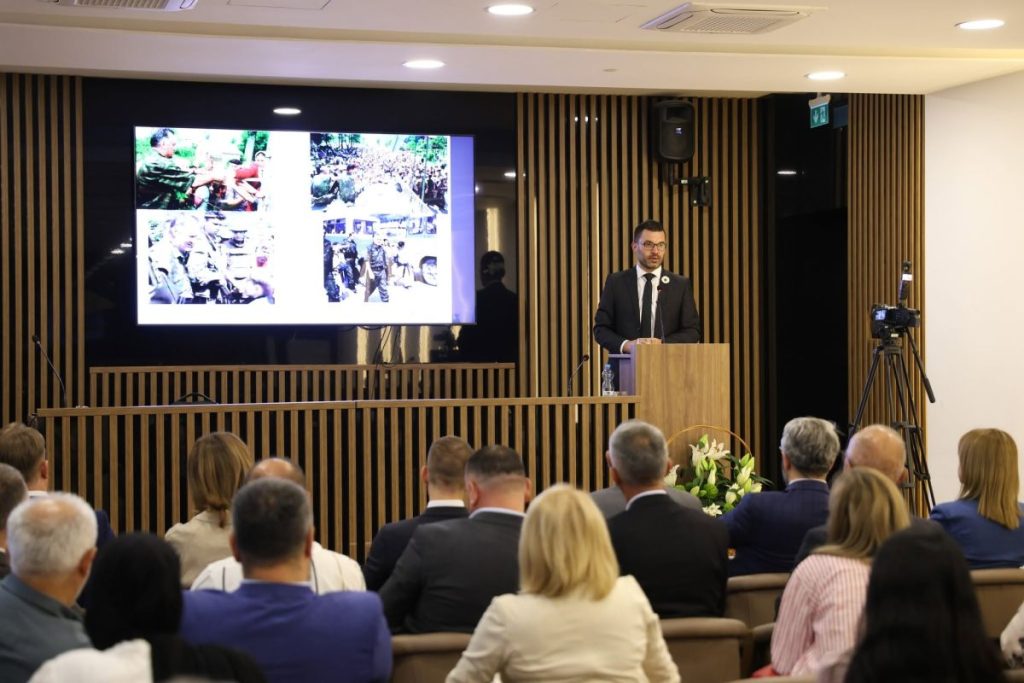
On 9 July 2026, a public panel discussion entitled “The Srebrenica Genocide – From Judicially Established Truth to Contemporary Denial” was held in Rožaje, organised by the Bosniak Council in Montenegro, the Rožaje Municipal Assembly, the Cultural Centre, and the Rožaje Majlis of the Islamic Community. In addition to the Institute’s Director, Dr Muamer Džananović, the speakers included Mirsad Rastoder, President of the Executive Board of the Bosniak Council in Montenegro, and Almir Avdić, President of the Rožaje Municipal Assembly.
In his presentation, Dr Džananović addressed the historical context of the 1995 genocide against Bosniaks in and around Srebrenica. He highlighted the continuity of crimes committed against the Bosniak population of the Bosnian Podrinje region since 1992, the political and military processes that preceded the genocide, as well as the systematic nature of its planning and execution. Particular attention was devoted to contemporary challenges posed by genocide denial, historical revisionism, and attempts to relativise facts established by judicial proceedings.
On 10 July 2026, a commemorative programme marking the anniversary of the Srebrenica genocide was held in Novi Pazar, organised by the Bosniak National Council. As part of the programme, Dr Džananović delivered a public lecture entitled “The Srebrenica Genocide and Institutional Denial”.
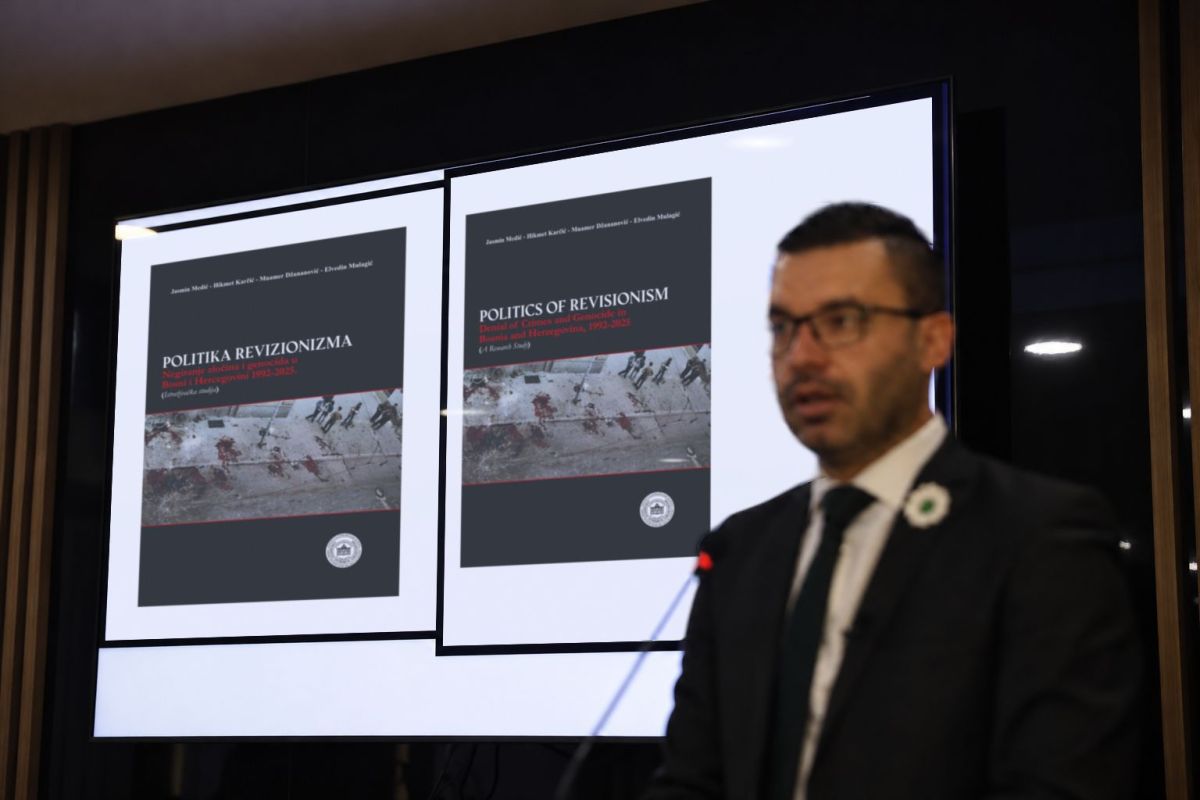
During his presentation, Dr Džananović also presented the results of the Institute’s scientific research, including the publication The Politics of Revisionism: Denial of Crimes and Genocide in Bosnia and Herzegovina, 1992–2025, published in both Bosnian and English. He emphasised the importance of systematic scientific research, documenting crimes, and publishing scholarly works as one of the key responses to attempts to falsify history and deny facts established by judicial proceedings. He presented copies of this and other Institute publications to the hosts in Novi Pazar and Rožaje.
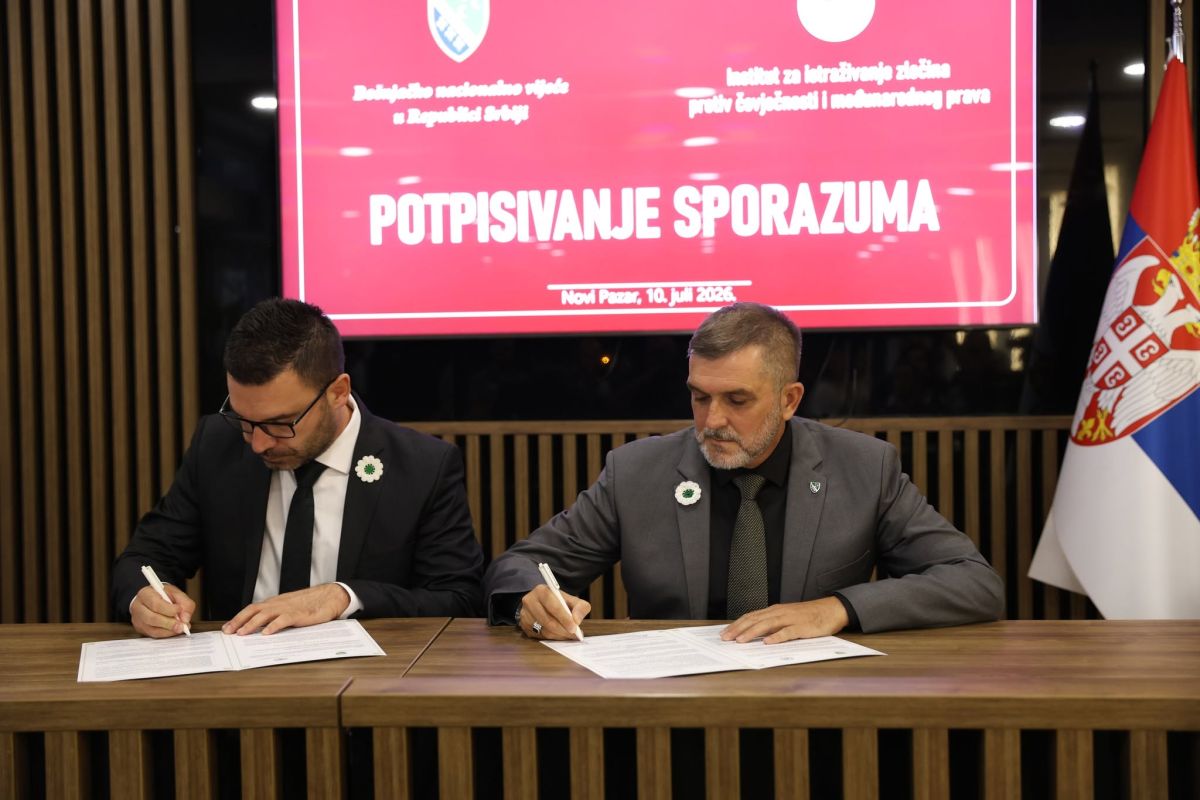
The visit to Novi Pazar was given particular significance by the signing of a Cooperation Agreement between the Bosniak National Council and the University of Sarajevo’s Institute for Research of Crimes against Humanity and International Law. The agreement was signed by Dr Fuad Baćićanin, President of the Bosniak National Council, and Dr Muamer Džananović, Director of the Institute. It establishes an institutional framework for strengthening cooperation in scientific research, crime documentation, the preservation of the culture of remembrance, and joint efforts to counter the denial of genocide and other mass atrocities.
The Director of the Institute’s visit to Serbia and Montenegro was carried out with the support of the Federal Ministry of Displaced Persons and Refugees.
Photo gallery