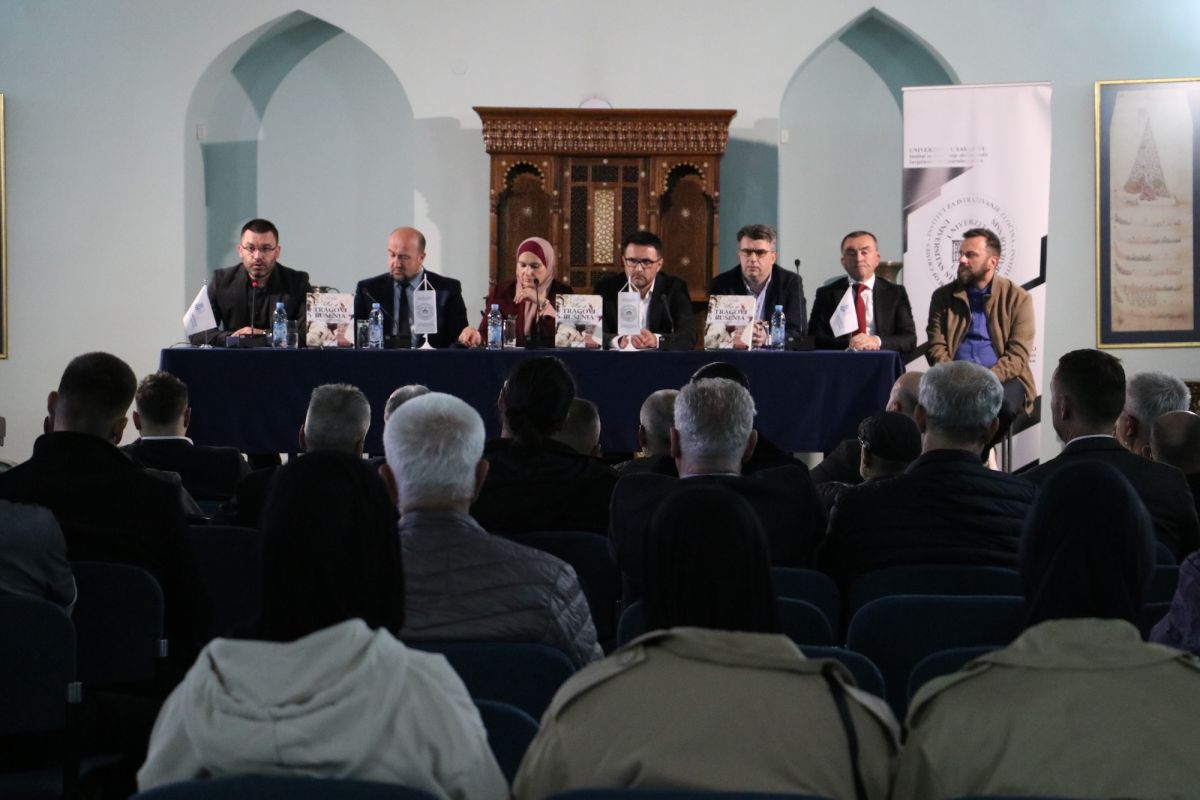
The promotion of the book Traces of Destruction – Destroyed and Damaged Mosques in Bosanska Krajina, 1992–1995, and Their Reconstruction, authored by Prof. Dr. Mujo Begić and Davor Midžić and published by the University of Sarajevo – Institute for Research of Crimes against Humanity and International Law, was held on Thursday, 22 October 2026, at Gazi Husrev-bey’s Hammam – the Bošnjački Institute – Adil Zulfikarpašić Foundation in Sarajevo.
The book was presented by Dr. Muamer Džananović, Director of the Institute; M.A. Muhamed Jusić, Director of the Directorate for Foreign Affairs and Diaspora of the Riyasat of the Islamic Community in Bosnia and Herzegovina; Prof. Dr. Amir Duranović, Professor at the Faculty of Philosophy of the University of Sarajevo; and Dr. Jasmin Medić, Senior Research Associate at the University of Sarajevo – Institute of History. The event was moderated by Dr. Medina Mehmedović-Mulalić.
The presenters emphasized the significance of the book as a scientifically grounded and documentary-rich work that systematically examines the scale of the destruction of Islamic religious and cultural heritage in Bosanska Krajina. Particular emphasis was placed on the authors’ research methodology, which combines archival materials, testimonies, court documentation, relevant literature, years of fieldwork, and extensive photographic documentation. This approach makes it possible to examine the destruction of individual structures not in isolation, but within the broader context of the persecution of the population, mass crimes, and efforts to erase traces of the centuries-long presence of Bosniaks in these areas.
The book Traces of Destruction is the result of years of systematic, empirically grounded research into the destruction and damage of mosques and other facilities belonging to the Islamic Community in Bosanska Krajina during the aggression against the Republic of Bosnia and Herzegovina, from 1992 through the end of 1995, as well as the subsequent post-war reconstruction process.
According to the research findings presented in the book, of the 248 mosques located in Bosanska Krajina in 1992, 208, or 83.7 percent, were either completely destroyed or damaged to varying degrees. The destruction or damage of 38 mesdžids (smaller Muslim places of worship) was also documented. These figures testify not only to the scale of the physical devastation but also to the systematic destruction of Bosniak cultural, historical, and religious heritage.
During the promotion, particular attention was drawn to the connection between violence against people and the destruction of the places in which generations had lived. The destruction of mosques, the removal of their remains, alterations to the appearance of the sites and, in certain cases, the repurposing of these spaces were examined within the context of broader processes of persecution and efforts to erase the recognizable traces of a community’s previous life and presence.
At the same time, it was emphasized that the reconstruction of religious buildings does not, in itself, mean that the consequences of persecution and wartime destruction have been overcome. Reconstructed mosques cannot bring back those who were killed, reunite dispersed families, restore lost social ties, or reverse the demographic changes in numerous towns and villages across Krajina. Three decades after the end of the war, the consequences remain visible in declining population numbers, the incomplete process of return, and the fact that many communities today have significantly fewer inhabitants than they did before 1992. The relationship between the reconstructed physical environment and a community permanently transformed by war is therefore one of the important themes the book raises for future research.
Speaking on behalf of the authors, Prof. Dr. Mujo Begić addressed the audience about the origins of the book, the years of research behind it, and the need to systematically document and preserve facts concerning the destruction of mosques and other facilities belonging to the Islamic Community. He highlighted the importance of field research and documentation collection, as well as the need to preserve materials that will enable further research into the crimes committed and their long-term consequences.
The promotion was organized by the University of Sarajevo – Institute for Research of Crimes against Humanity and International Law, the Bošnjački Institute – Adil Zulfikarpašić Foundation, and the Directorate for Foreign Affairs and Diaspora of the Riyasat of the Islamic Community in Bosnia and Herzegovina.
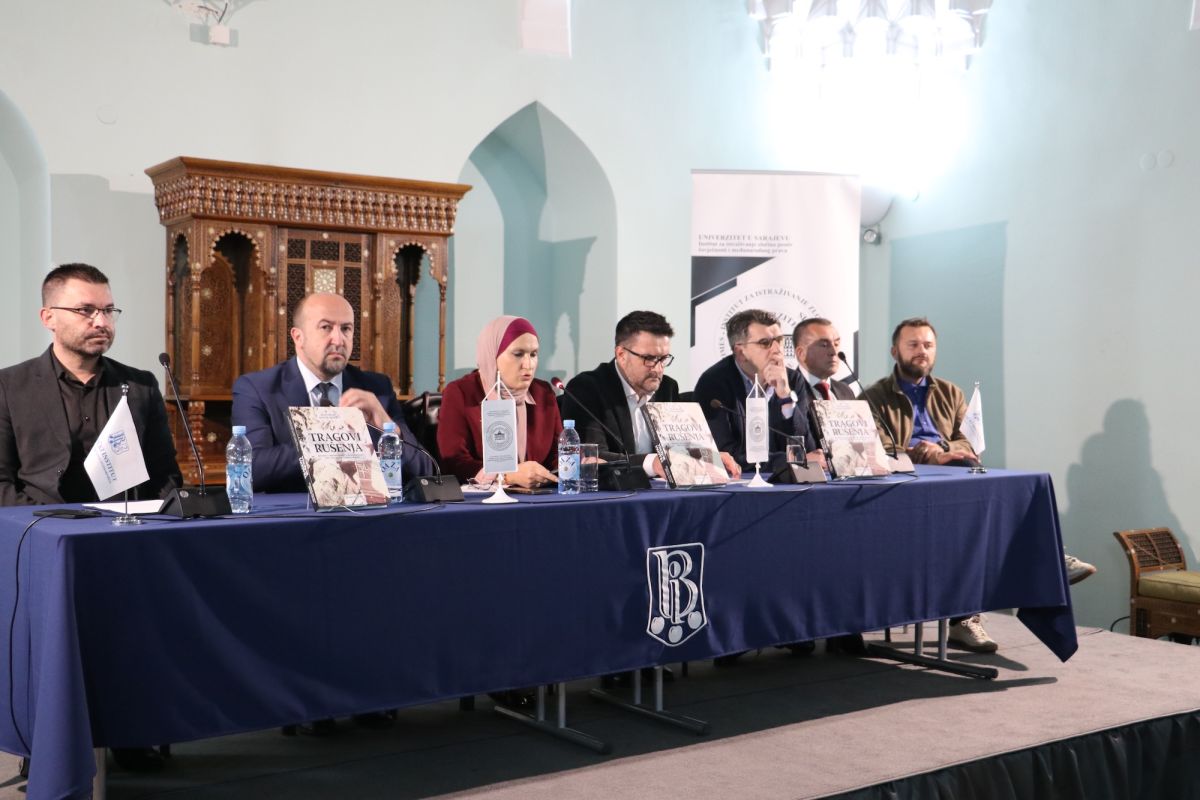
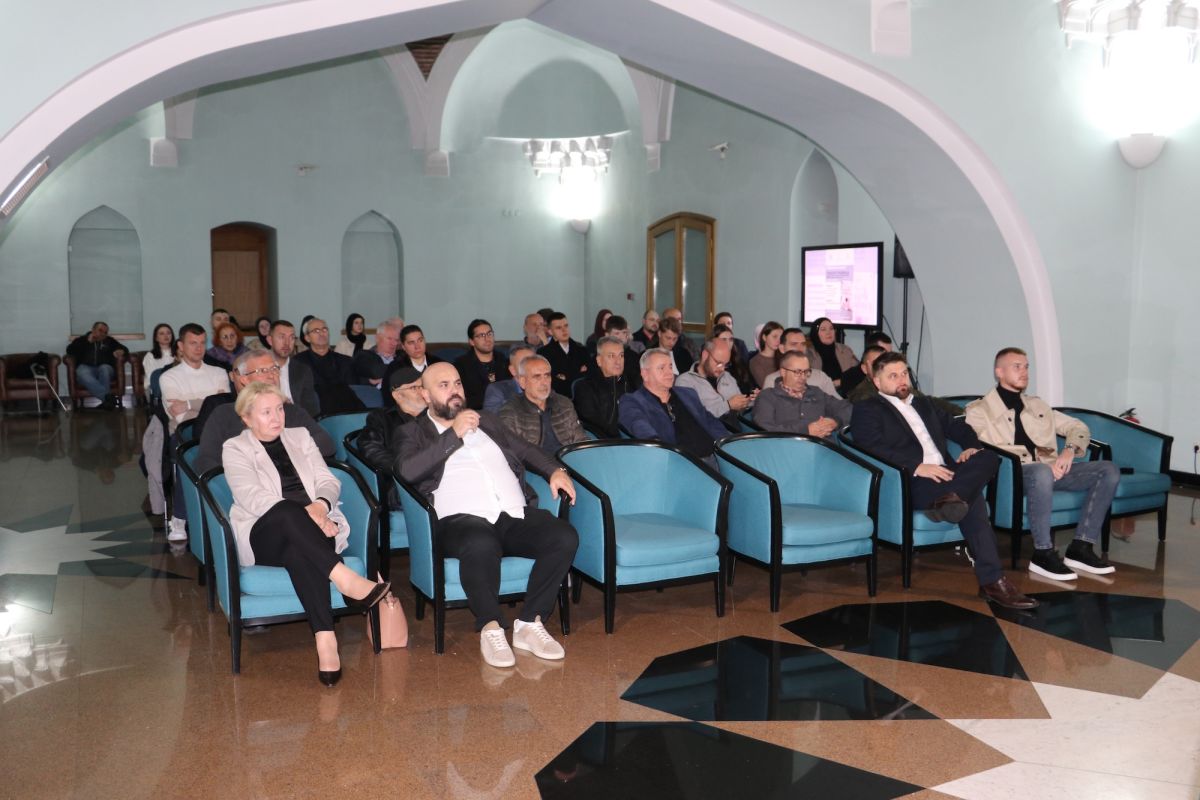
Photo: Preporod


