ased on testimonies of surviving camp detainees and available empirical data, it has been confirmed that residents of Grapska (Doboj), during the aggression against the Republic of Bosnia and Herzegovina, were among the civilians who endured some of the longest and most severe experiences of detention.
By: Dr. Almir Grabovica, Research Associate at the Institute for Research of Crimes Against Humanity and International Law, University of Sarajevo
Their wartime fate was marked by years of detention in multiple camps under the control of the authorities of the self-proclaimed Republika Srpska, forced labour, systematic abuse, as well as the deaths and disappearances of detainees. For the people of Grapska, captivity was not tied to a single location. They passed through an entire chain of camps and detention facilities controlled by the self-proclaimed Republika Srpska—from Kostajnica and Bare near Doboj, through Stara Gradiška, Manjača, and Batković, to Rudo, Kotorsko, and, in particular, the Kula Correctional Facility in Sarajevo. Kula remains one of the central sites of their suffering.
Kula – Prolonged Detention and Forced Labour
After only two days spent in the Batković camp, on 15 December 1992, 130 detainees were transferred to Kula Prison, including 112 residents of Grapska. According to their testimonies, upon arrival they were met by Deputy Warden Đorđe Faladžić, while the prison warden was Soniboj Škiljević. Detention conditions were extremely inhumane—empty cells without beds, minimal food, and a complete lack of basic living conditions. Detainees were taken out daily for forced labour, including digging trenches and fortifying positions of the self-proclaimed Army of Republika Srpska on the front lines around Sarajevo, as well as forced labour on agricultural estates and infrastructure projects. According to survivor testimonies, each such engagement brought material benefit to the camp administration, while detainees were exposed to constant danger and abuse.
Testimonies About Guards: Gvozden Šarac Stands Out
Surviving detainees testify to the brutal behaviour of certain guards at Kula. Among those most frequently mentioned are guard commander Neđo Pandurević, his deputy Božo Radović, and guard Gvozden Šarac, whose name appears repeatedly in individual testimonies.
Muhamed Hurtić, a detainee from Grapska, states that he spent two years, two months, and seven days in camps, and that his time in the Kula camp left the deepest consequences. In his testimony, he notes that Gvozden Šarac was remembered for his harsh and humiliating treatment of detainees. When Šarac was on duty, strict silence was enforced—no talking, heads down, hands behind backs. Witnesses report that detainees were subjected to both psychological and physical abuse. Hurtić particularly recalls a nighttime incident when, without any provocation, detainees were taken out of their cells and abused for hours. According to his testimony, guard Milinković also participated in this incident. Such actions left lasting consequences on the health and psychological well-being of the detainees.
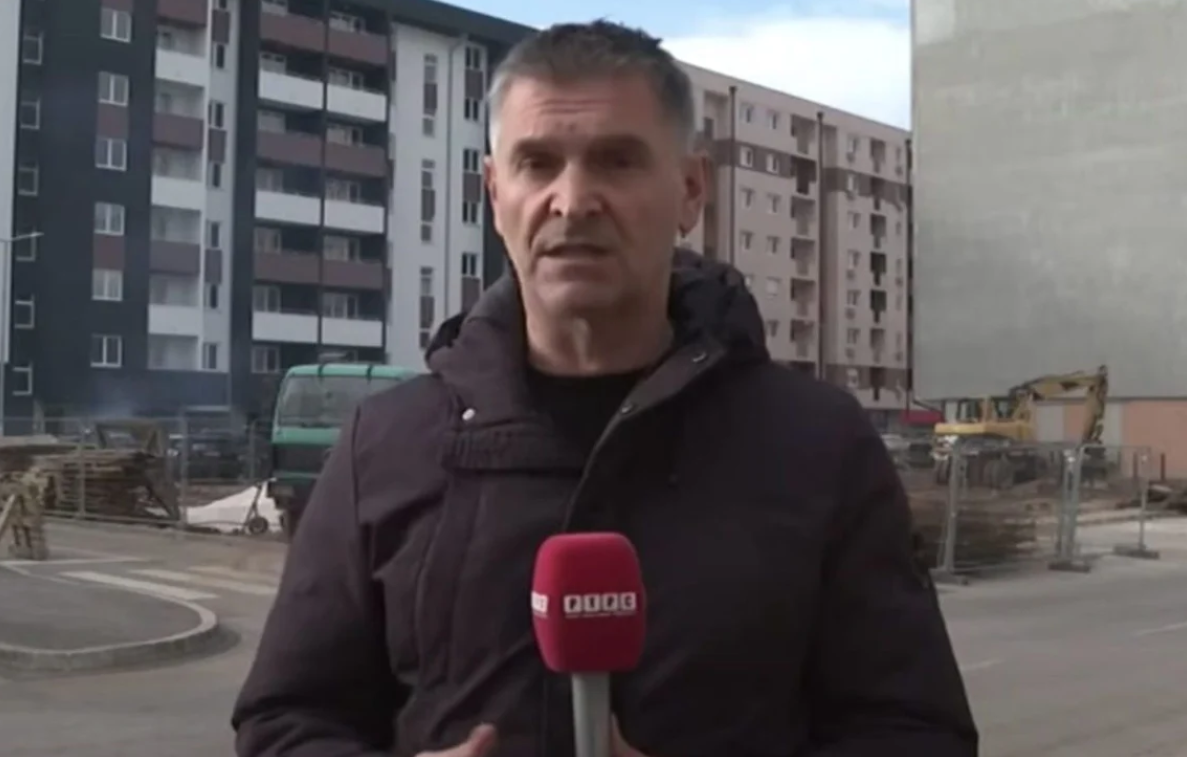
Given Šarac’s described treatment of detainees, his recent public appearance on RTRS, in which he described as “concerning” the purchase of apartments by Bosniaks—citizens from the Federation of Bosnia and Herzegovina—in East Sarajevo and other parts of Republika Srpska, comes as no surprise. On the contrary, such statements align consistently with the narrative pattern Šarac displayed during the war, marked by intolerance, humiliation, and dehumanisation of those he perceived as “others.” In this context, his media discourse cannot be viewed as an isolated political comment, but rather as a continuation of the same ideological pattern and conduct, in which fear, stigmatisation, and exclusion are used as tools for shaping public space and collective perception.
Forced Labour in a Mined Area
One of Hurtić’s most harrowing memories relates to forced labour in the Rogoj area near Trnovo, where detainees were engaged in repairing power lines. Despite warnings from Serbian civilians that the terrain was mined, guard Gvozden Šarac ordered the detainees to continue moving toward the power line.
Soon afterward, a landmine exploded, wounding several detainees. One of them, Osmo Škiljan from Jajce, later died of his injuries in hospital. The remaining wounded detainees were returned to Kula Prison the same day after inadequate medical treatment. Some of them continue to suffer permanent consequences from their injuries.
Death, Escape, and Prisoner Exchanges
During forced labour, eleven detainees from Grapska were killed: Denis Ahmić, Safet Bešić, Suvad Hasančević, Senad Hasančević, Munever Hidić, Samir Hidić, Ismet Hidić, Izudin Hodžić, Mustafa Hurtić, Kasim Hurtić, and Salih Hurtić. Mihrudin Begović died in Kasindol Hospital due to the lack of adequate medical care, despite suffering from diabetes. At the same time, thirteen detainees managed to escape to free territory during forced labour, risking their lives as the only way out of prolonged captivity.
Most detainees from Grapska were exchanged during 1993, while some remained in camps until the end of the war, passing through Kula, Rudo, Doboj, Kotorsko, and Usora. The final exchange of surviving detainees from Grapska took place on 24 December 1995 in Doboj.
Among the Longest-Detained in Bosnia and Herzegovina
Research shows that some detainees from Grapska spent up to 1,342 days in captivity, placing them among those with the longest periods of detention in Bosnia and Herzegovina. A particularly notable case is Jasmin Husaković, who during the aggression was detained in around ten camps under the control of Republika Srpska authorities, as reported by the media as early as 1996.
The testimonies of residents of Grapska, including those regarding the role of individual guards at Kula Prison, represent crucial historical evidence of systematic crimes and the prolonged suffering of the Bosniak civilian population. Recording and publicly publishing these testimonies remains a lasting obligation of society—in the name of truth, justice, and remembrance.
The author is a Research Associate at the University of Sarajevo – Institute for Research of Crimes Against Humanity and International Law
Source: Radiosarajevo.ba
(2).png)
(3).png)
.png)