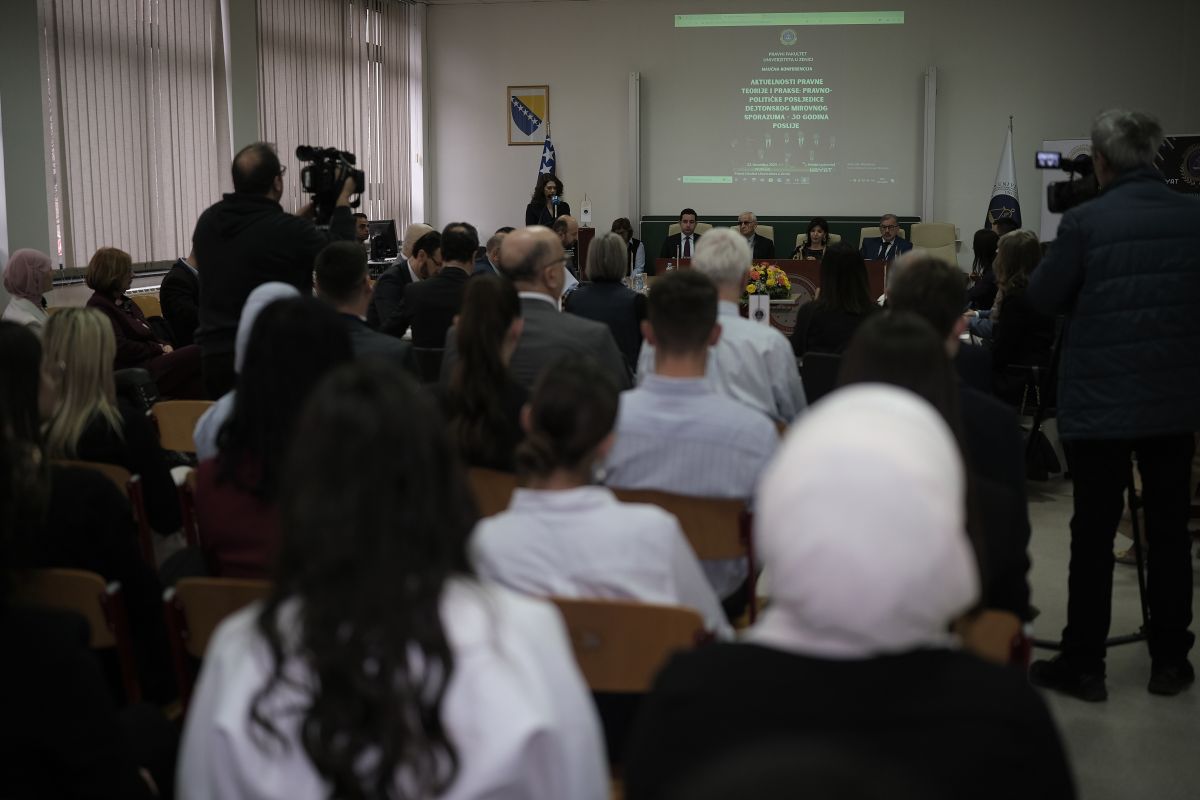
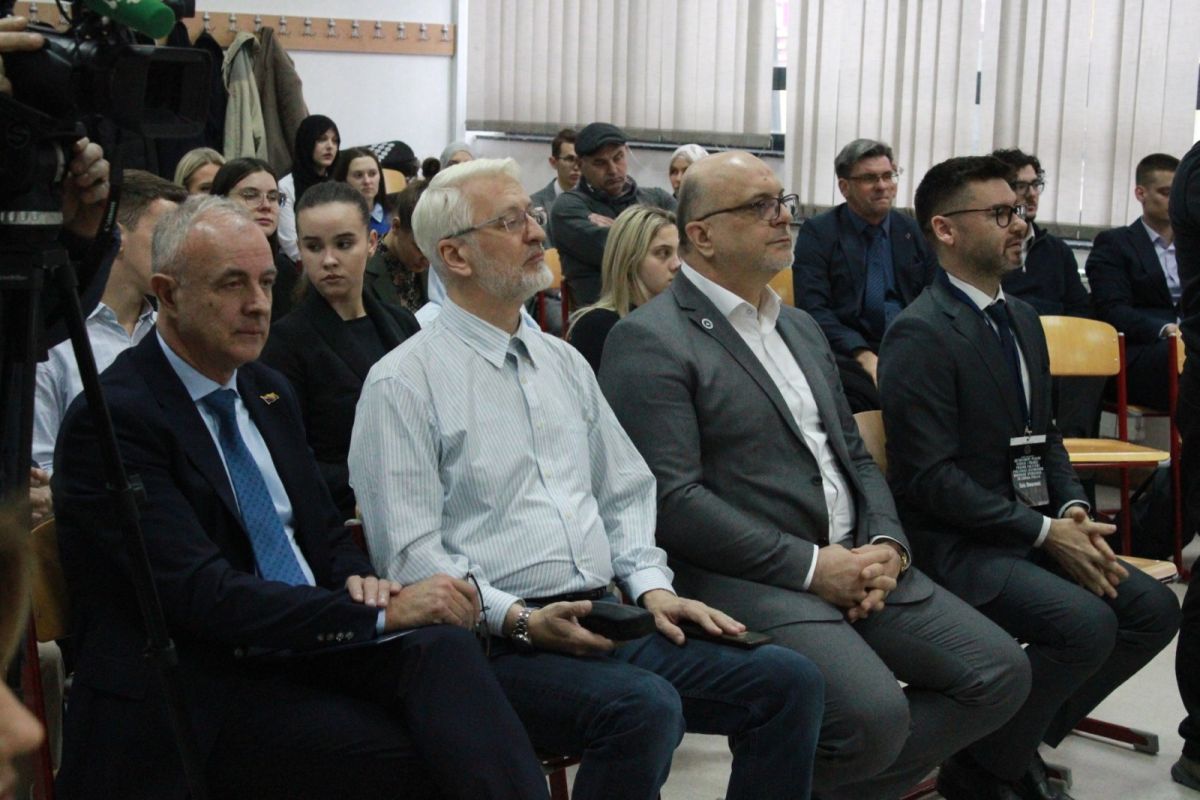
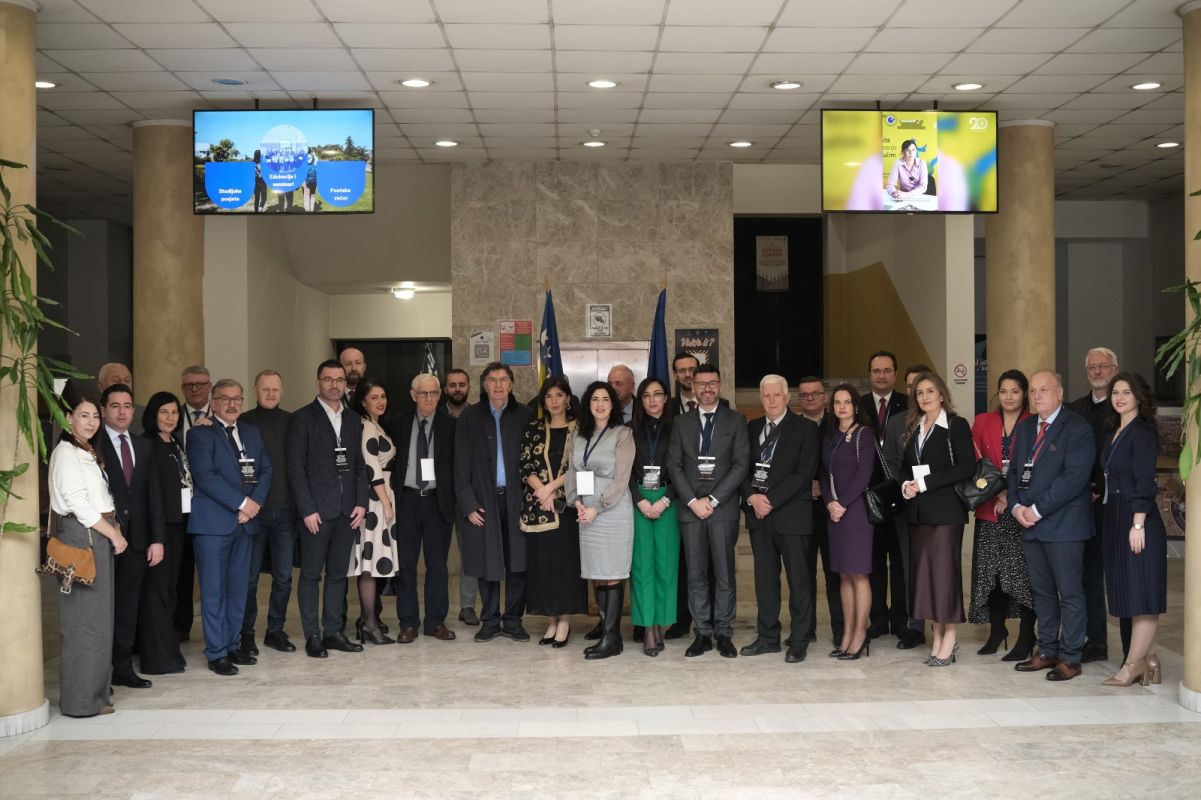
As part of the celebration of its twentieth anniversary, the Faculty of Law of the University of Zenica organised a scientific conference on 23 December 2025 entitled “Current Issues in Legal Theory and Practice: Legal and Political Consequences of the Dayton Peace Agreement – 30 Years Later.” A ceremonial academic event marking the jubilee was held the evening before. The conference brought together prominent representatives of the academic community, institutions of Bosnia and Herzegovina, as well as guests from the diplomatic corps.
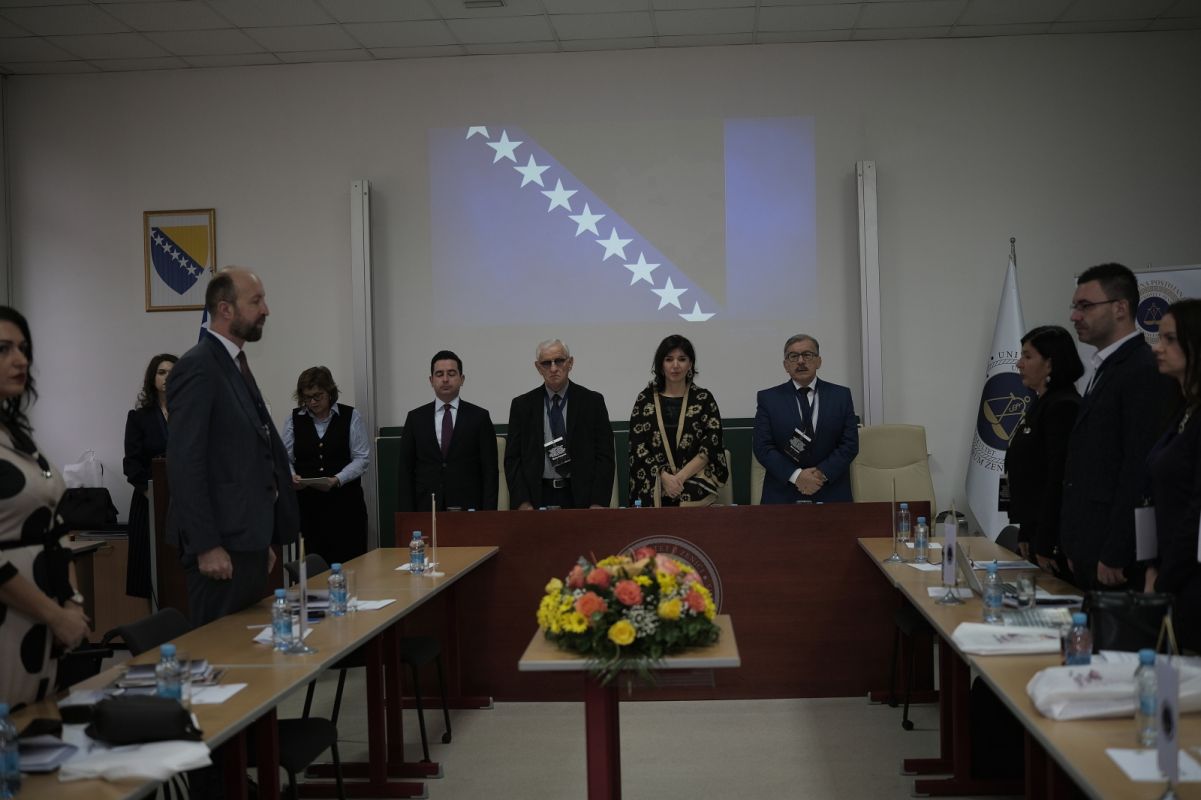
The conference was formally opened by Prof. Jusuf Duraković, Rector of the University of Zenica, and Prof. Enis Omerović, Dean of the Faculty of Law of the University of Zenica.
Introductory addresses were delivered by Okyanus Akın, Deputy Head of Mission of the Embassy of the Republic of Türkiye in Bosnia and Herzegovina; Prof. Larisa Velić, Judge of the Constitutional Court of Bosnia and Herzegovina; Academicians Mirko Pejanović and Ejup Ganić, members of the Academy of Sciences and Arts of Bosnia and Herzegovina and the Presidency of the Republic of Bosnia and Herzegovina; and Miro Lazović, President of the Assembly of the Republic of Bosnia and Herzegovina.
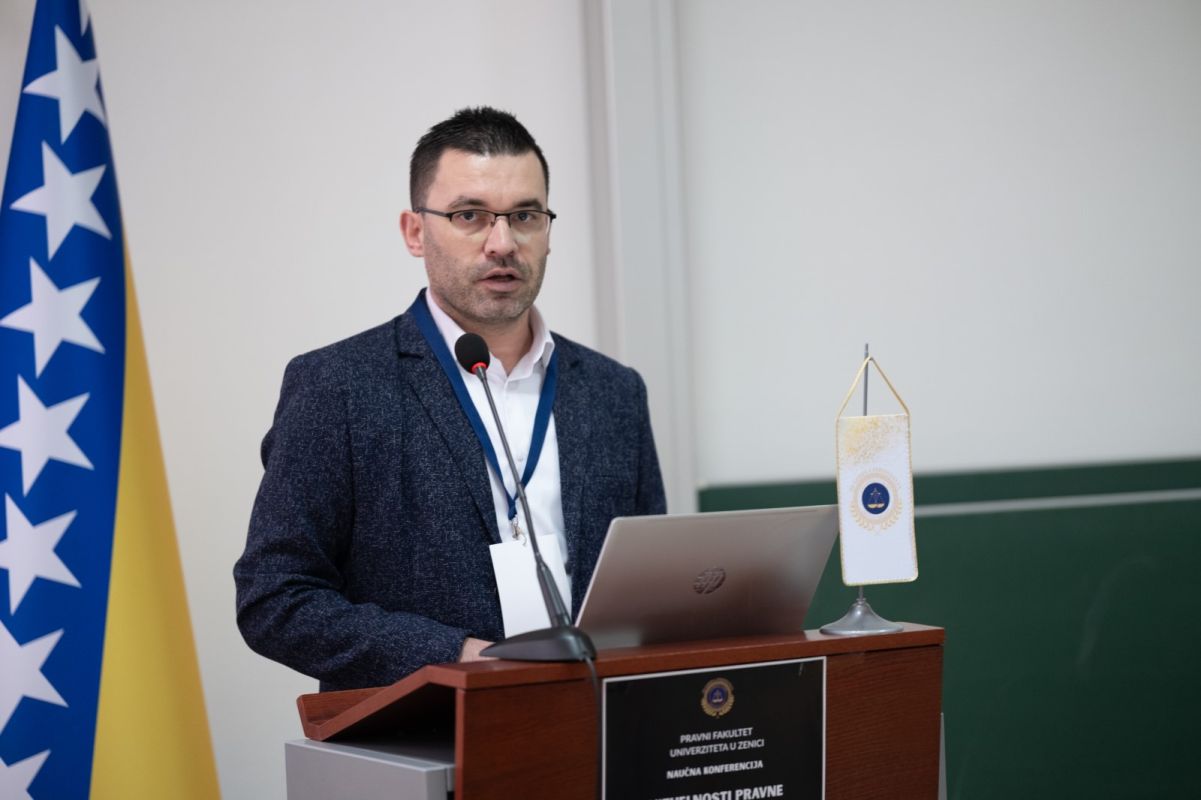
The conference programme was organised into three thematic panels, within which key legal, political, and social issues of contemporary Bosnia and Herzegovina were discussed. As part of the panel dedicated to the political and social consequences of the Dayton Peace Agreement, Dr. Muamer Džananović, Director of the Institute for Research of Crimes Against Humanity and International Law of the University of Sarajevo, also participated. In his presentation, Dr. Džananović analysed the long-term political and social implications of the Dayton Agreement, with particular emphasis on the institutional position of Bosniaks in the Bosnia and Herzegovina entity of Republika Srpska, democratic processes, manifestations of systemic discrimination, and challenges in the realization of collective and individual rights within the post-Dayton constitutional framework.
The conference once again reaffirmed the role of the Faculty of Law of the University of Zenica as an important academic and societal actor in the analysis of contemporary legal and political challenges in Bosnia and Herzegovina.
(2).png)
(3).png)
.png)