Written by: Dr. Zilha Mastalić Košuta, Senior Research Associate
University of Sarajevo – Institute for Research of Crimes
Against Humanity and International Law
Until January 1993, clashes between the HVO and the ARBiH were local and sporadic. However, from January onwards, the conflict escalated into an open armed confrontation. Firstly, the HVO evolved from a strictly military organization into an administrative-political entity, forming its own police forces and establishing all the functions and structures necessary for the operation of a state-like system. The HVO used its military superiority to establish authority in many areas. Such a situation, along with the formal creation of a Croatian entity within the internationally recognized Republic of Bosnia and Herzegovina, contributed to the deepening of tensions.
Secondly, a significant factor that encouraged and accelerated the open armed conflict was the peace plan presented by the European co-chairs Vance and Owen – the Vance-Owen Peace Plan. It envisioned the decentralization of Bosnia and Herzegovina and its division into 10 provinces based on ethnic principles. Although it was not the direct cause of the conflict, the proposed plan encouraged the HV and HVO to pursue their strategic goals through armed conflict in order to secure desired territories militarily. Even though the Vance-Owen Plan was never implemented, these forces, referring to it, attempted to take full political and military control over mixed provinces in Central Bosnia (Province 10) and Herzegovina (Province 8). During this period, Croatian media increasingly disseminated propaganda narratives about Islamic fundamentalism and the presence of mujahideen.
When it became clear that there would be no military intervention by the international community, and with support from the leading political structures of the Republic of Croatia, HVO forces felt encouraged to move forward more strongly, intensively, and decisively in implementing their plans. Attacks by the HV and HVO were coordinated with those of the VRS, and from January 1993, alongside the VRS operation in the Podrinje region (Operation “Pesnica”), attacks began on Gornji Vakuf, followed in the subsequent months by attacks on other locations in Central Bosnia—Kiseljak, Busovača, Vitez, and in May 1993, Mostar.
Franjo Tuđman and Croatia’s Minister of Defence, Gojko Šušak, intensified pressure on Bosnian and Herzegovinian representatives through logistics and the systematic blockade of roads. The Bosnian side was also frequently pressured by international representatives, while the peace plans they proposed were detrimental to the state of Bosnia and Herzegovina. At several meetings led by President Tuđman with his associates, he stated that Croatia’s assistance and engagement in Herceg-Bosna were necessary because the issue of the future borders of the Croatian state was being resolved there. He emphasized the importance of the line encompassing Novi Travnik, Vitez, Busovača, and Mostar, as well as resolving the situation in Gornji Vakuf, Bugojno, and the Prozor–Jajce communication route.
Vitez and Busovača, towns located in Central Bosnia, were among the 30 municipalities included in Herceg-Bosna. The village of Ahmići held primary importance for maintaining the Vitez–Busovača road connection. This area is also a local community comprising the settlements of Ahmići, Pirići, Nadioci, and Kratine. Part of the surrounding southern areas (Donja Rovna) had already been captured by the HVO during the January–February clashes, thereby reinforcing the corridor from the southern side. By capturing Ahmići on April 16, the HVO further reinforced the corridor from the northern side. (They assessed that in the Ahmići area, the Vitez–Busovača corridor was very narrow and most vulnerable to being cut off, at least until April 16.)
Military documents show that the HVO effectively exploited the weaknesses of the ARBiH in that area. Immediately before the attack and the crime, it cunningly took advantage of the agreed activities of a joint commission aimed at calming the situation, then initiated combat operations and secured better operational and tactical positions toward Ahmići and other villages with a Bosniak majority around Vitez. They encircled ARBiH forces in Ahmići, preventing their breakout and blocking reinforcements from the direction of Zenica. On April 14, a special HVO unit known as the “Jokers” (Džokeri) from Busovača entered Vitez and, together with local units, blockaded the town and the following day began arresting Bosniak males older than 14. By April 15, the HVO had completed all preparatory actions, blocked all key roads, and set the stage for the planned attacks.
The decision to attack Ahmići was confirmed at a meeting of the Central Bosnia Operational Zone command in Busovača, led by convicted war criminals Dario Kordić and Tihomir Blaškić, on the night of April 15–16, 1993. It was decided that “the Muslims should be attacked in the morning.” Convicted war criminal Paško Ljubičić, commander of the 4th Battalion of the HVO Military Police, stated at the meeting that “the groups would move in a line and there should be no surviving witnesses.” In order to justify the attack, intensive propaganda activities were launched portraying the ARBiH as the initiator of the conflict, with Blaškić playing a prominent role. Due to the strategic importance of this area, the most combat-ready HVO units were involved in the attack, including the Military Police, the counter-sabotage platoon of the “Jokers” unit, “Maturice,” the Vitez Brigade of the HVO, and others. To prevent UNPROFOR from entering the Ahmići area, it was agreed that members of the Vitez Brigade would block the road from Vitez. Information sent by Lieutenant Colonel Bob Stewart to the commander of the British battalion, later used among other evidence before the ICTY, included a statement by Vlado Križanac: “First kill the men, then the male children, and then everyone else. Destroy everything that is Muslim.”
On April 16, 1993, there were simultaneous and coordinated attacks by Croatian forces on Ahmići, as well as on villages along the Lašva Valley and the town of Vitez. In the early morning at 5:30 a general HVO assault began, initially targeting the northern part of Ahmići. The shelling was such that it prevented people from fleeing toward the forested area north of the village. The only options left for the residents were to stay in their homes or flee south toward the main road to Vitez. Most residents chose to flee toward the southern part, toward the open field. However, there they were ambushed by HVO members, where at least 20 people were killed. They were executed cold-bloodedly, shot at close range in the head and neck.
During the shelling of the northern side of the village, HVO soldiers entered the village and, according to prior agreement, moved in groups of five or more, shooting and throwing hand grenades through the doors and windows of residential houses. On average, about 50 grenades were fired at each house using various weapons, including rocket-propelled grenades. Some residents were ordered by HVO members to leave their homes and were then summarily executed, while others were killed inside their houses. At the same time, Bosniak houses were set on fire.
In Ahmići, 116 people were killed. The victims were mostly elderly people, women, children, and infants. Entire families were burned. Seventeen children were killed, including a three-month-old baby, Sead Ahmić. Five children could not be identified at the initial identification due to mutilation and burning of the bodies. Some children were subjected to extreme torture before being killed.
UN forces entered the village around noon on the day of the crime with the intention of recovering wounded and dead civilians. There are recordings showing surviving residents of Ahmići pleading with UN forces for help. By then, the crime had already been largely carried out. About ten days after the massacre, field staff of the UN Special Rapporteur visited the area.
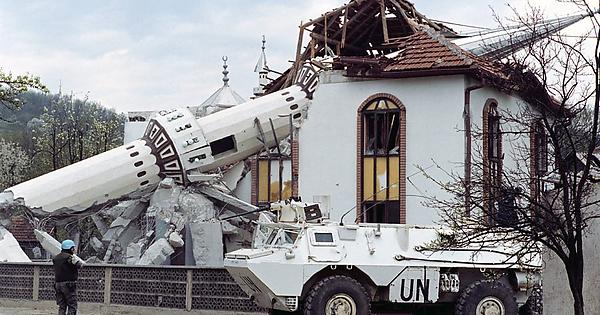
Their reports show that smoke was still rising from some houses and around 100 bodies were found under the rubble. The village was described as a place emitting a “smell of death.” All of the approximately 180 Bosniak homes were completely destroyed. About fifteen Croat houses remained intact, while some Croat villagers had stayed throughout the events and refused to speak about the crime. Villagers who had contact with the HVO knew that an attack on the village was being prepared. International observers reported seeing HVO soldiers firing shells at homes and indiscriminately shooting at civilians. They also stated that the HVO had killed several families inside their homes with shots to the head at close range, and that rapes were also committed by HVO members. HVO soldiers also repeatedly expelled non-Croat residents from their homes. As justification for such expulsions, it was claimed that it was necessary to “create additional housing units for the expected arrival of displaced persons of Croatian nationality.” Everything that reminded of Islamic religious identity was destroyed in the village. Two mosques were also destroyed.
In the village, there were no legitimate military targets, nor was there any organized resistance to the attack, as confirmed by international observers as well as certain local HVO Croatian commanders. At the time of the attack, Bosniaks in Ahmići were caught while sleeping, which contradicts certain statements made by ICTY defendants claiming that Bosniaks were prepared to attack the HVO. Before the International Criminal Tribunal in The Hague, the following individuals were convicted for this crime: Dario Kordić, Tihomir Blaškić, Paško Ljubičić, Miroslav Bralo, Anto Furundžija, Drago Josipović, and Vladimir Šantić.
In addition to the attack on Ahmići, very strong military operations were also carried out on April 16 in other areas of the Vitez municipality (the villages of Kruščica, Vranjska, and Preočica, as well as Stari Vitez) and in villages in the Busovača municipality. At dawn on April 16, HVO members also raided homes in Stari Vitez. Severe crimes were committed against entire families, including the execution of a whole family among whom was a two-year-old girl, Amela Topalović. Detained Bosniaks were forced between late April and early May 1993 in the village of Kratine to dig trenches and were used as “human shields.” The village of Donja Večeriska was destroyed in an HVO attack on April 16, 1993, while in the attack on the village of Gaćice on April 20, 1993, several Bosniaks were killed and houses were burned. In the cinema hall in Vitez, after April 16, 1993, around 200–300 Bosniak men of various ages were detained, subjected to cruel treatment, forced to dig trenches, and used as hostages and human shields.
Some further key points regarding this crime:
After the massacre in Ahmići, Blaškić allegedly issued a written commendation to the commander of the HVO Military Police, Paško Ljubičić, and his perpetrators for their “courage” and the execution of the operation. He also commended the special-purpose unit “Vitezovi,” commanded by Darko Kraljević.
Blaškić also “camouflaged” the orders he issued for attacks in order to document a different version of events and avoid responsibility for the crimes he had planned together with Kordić and carried out with various units. This involved a dual chain of command over Croatian forces in Bosnia and Herzegovina. One example shows Blaškić issuing two different orders under the same protocol number. One order called for the cessation of hostilities against the ARBiH in the Vitez municipality at 16:00 on April 16, while another order with the same protocol number stated something entirely different, quoting: “Do not execute my order No. 01-4-271/93 of 16 April 1993 at 16:00 until you receive my verbal instructions. Keep it in case UNPROFOR representatives visit your command and request such a document...”
Blaškić would agree on one thing at meetings and act differently on the ground; he negotiated only to mislead, while continuing attacks against the ARBiH and blaming it for starting the conflict, repeatedly demanding a cessation of hostilities. He filed protests with the EC Monitoring Mission, UNPROFOR, and the command of the 3rd Corps, accusing the Army of alleged attacks. He agreed to contact with the Army only after HVO units had achieved the objectives he had ordered (see: Amir Kliko, War in Central Bosnia 1992–1994, pp. 467–469). Regarding the Ahmići crime, he also misled the media and presented various theories, manipulating facts (claiming that Muslims staged the crime in Ahmići with the help of Bob Stewart, that the crime was committed by HOS members from Zenica—who were mostly Muslim—or that Muslims in HVO uniforms committed the crime, etc.).
The ICTY initially sentenced Blaškić to 45 years, but on appeal reduced the sentence to 9 years, due to allegedly misinterpreted later documentation used for his alibi. A key aspect of Blaškić’s judgment is that it established the existence of an international armed conflict involving Croatia. Dario Kordić, who coordinated with Blaškić, was sentenced to 25 years. He was later released after serving two-thirds of his sentence, and what is considered a disturbing fact is that he has expressed pride in his actions and stated that he would do everything the same again.
Some testimonies of victims
Some testimonies of survivors of the crime in Ahmići can be found at this link.
“On April 16, 1993, at around 6 a.m., I felt something like a strong storm, then I saw bullets hitting the wall above my head. Then I heard loud banging on the door. My husband and three children were with me in the house. As soon as I heard the banging, I went toward the hallway… Suddenly I heard a scream. After that, my son said he was wounded. I turned and saw my son standing with his right hand raised. At that moment I could not see where the wound was. Then I shouted: ‘Don’t shoot, my child is wounded!’ At that moment my husband also shouted: ‘My child is wounded, don’t shoot!’ I saw the barrel of a gun through the window. One of the soldiers told me to come outside. My husband took our son in his arms and went toward the door. I heard a shot and saw them fall. I tried to go outside. I went to my son, took him in my arms and saw that he was dead. I carried him into the house, laid him on the floor and closed his eyes. His face was covered in blood. I took a wet cloth and washed him. I tried several times to go outside to see what had happened to my husband. They did not allow me because of gunfire. I called him, and he answered. I looked for something to help my husband. When I returned, he was dead. I told my daughters that both of them were dead. On my son’s body I saw three wounds in the stomach and one in the chest.”
Such and similar testimonies were heard from each of about 130 surviving witnesses from the village of Ahmići. There is also a very distressing testimony from Hazim Ahmić, which can be found at this link.
This document is from the author’s private collection.
CONCLUSION
The crime in Ahmići is an extremely serious war crime and one of the most monstrous crimes committed against the Bosniak population, carried out in a planned, organized, and systematic manner.
The Ahmići massacre also served as a means to promote the “human resettlement of the population” for the exchange and homogenization of territories between Croats, Serbs, and Bosniaks, with the aim of partitioning Bosnia and Herzegovina, as allegedly agreed between Tuđman and Milošević, i.e., Karadžić and Boban.
The primary purpose of the crime was the extermination of Bosniaks from that area, as evidenced by the killings, the burning of their property and livestock, and the detention or deportation of many of them to camps. The ultimate goal of these acts was to spread fear among the population in order to permanently deter members of that ethnic group from returning to their homes.
The attack was not merely an isolated incident or one carried out without authorization by a rogue faction of the HVO or Military Police. It was part of a broader campaign in the Lašva Valley aimed at systematically and widely targeting the Bosniak population in order to achieve their extermination and change the demographic structure, which was seen as a prerequisite for unrestricted Croatian dominance in the area.
(2).png)
(3).png)
.png)